
Navratri – Significance, Puja Vidhi, Nav Durga, Vrat, Mantra, Rituals & Spiritual Benefits
What is Navratri or Navratre?
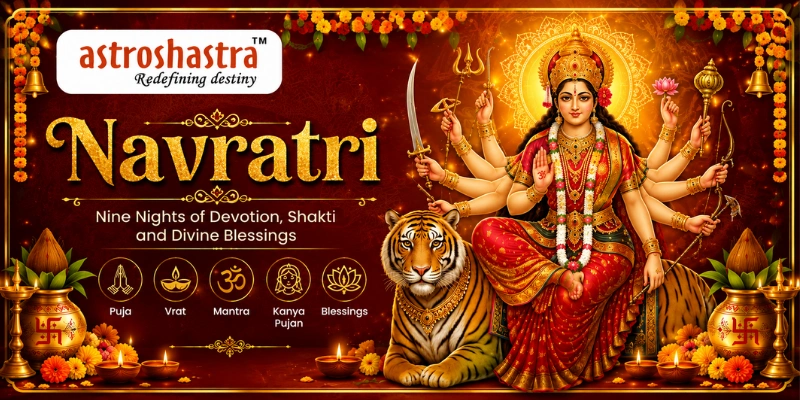
Navratri is a nine-night festival devoted to the worship of Shakti and the various manifestations of Maa Durga. It is celebrated in different forms throughout the Hindu calendar, with Chaitra Navratri and Sharad Navratri being the two major observances.
Sharad Navratri is traditionally observed around September and October and is followed by Vijayadashami or Dussehra. Chaitra Navratri occurs during the Chaitra month and is traditionally associated with Ram Navami.
Although customs differ from region to region, the central purpose remains the worship of the Divine Mother and the cultivation of devotion, discipline and spiritual strength.
Spiritual Significance of Navratre
Navratre symbolizes the victory of good over evil. It is traditionally believed that during these sacred days Goddess Durga fought and defeated the demon Mahishasura, representing the destruction of negative forces.
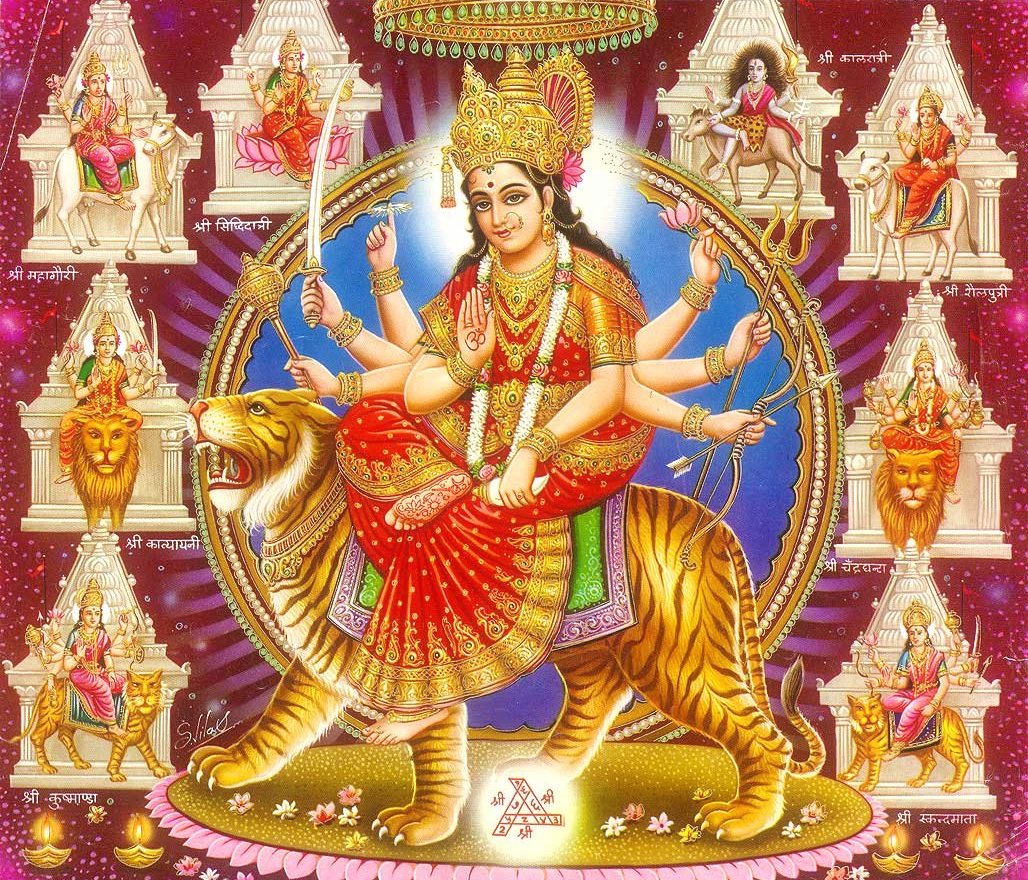
Each day is dedicated to one form of Goddess Durga, beginning with Maa Shailputri and concluding with Maa Siddhidatri. Together, these forms represent different aspects of spiritual power, courage, devotion, wisdom, purity, compassion, transformation and divine accomplishment.
Chaitra Navratri and Sharad Navratri
Navratras are observed twice a year, one in the month of Chaitra, preceding Ramnavami, and then in Ashvin, also called Sharadiye Navratre, preceding Dussehra.
The nine-day Navratra traditionally commences with Pratipada and continues through the bright half of the month until Mahanavami. During these nine days devotees may observe fasts, worship Durga and perform different forms of devotional practice.
The style of observing Navratra differs across different parts of India, but its central aim is to honour Mother Durga and seek her blessings.
Ghatasthapana or Kalash Sthapana During Navratri
On Pratipada, traditionally the first lunar day of the bright half of Ashvin, an earthen pitcher filled with water, with its mouth covered with green leaves and an earthen lid, is installed with invocation of Lord Ganesha and Maa Durga.
Durga is then ritually worshipped with Durva grass, flowers, leaves, lamps, incense, new grains, garments and other traditional Puja Samagri. Barley seeds are also traditionally sprouted and grown in a pot on this occasion in some traditions.
The Kalash represents sacred presence, abundance, purity and Divine Shakti. The ritual marks the formal beginning of the nine-day worship.
Astroshastra also provides a dedicated guide on Navratri Kalash Sthapana – Direction, Samagri, Vidhi and Significance.
Read Navratri Kalash Sthapana Guide →
Kanya Pujan and Sacred Reading During Navratri
Unmarried girls below the age of ten are traditionally worshipped and offered gifts during these nine days in several traditions. Kanya Pujan is particularly associated with Ashtami and Navami.
A clarified butter lamp may traditionally be kept burning before the installed Kalash during the celebration. Devotees may also read or recite Durga Saptashati, Devi Mahatmya and other sacred sections according to their spiritual tradition.
Durga Puja and Navratri Celebrations in India
In Bengal, Durga Puja is celebrated with great enthusiasm and festivity. Large Puja pandals are established at various places, with beautifully decorated idols of Maa Durga.
Durga is traditionally depicted riding a lion while defeating the demon Mahishasura. Her multiple hands carry divine weapons associated with different deities, symbolizing different forms of divine power.
The traditional weapons include Vishnu's discus, Shiva's trident, Varuna's conch shell, Agni's flaming dart, Vayu's bow, Surya's quiver, Indra's thunderbolt and other divine symbols.
A fierce battle between Durga and Mahishasura ultimately ends with the Goddess defeating him. The story represents the victory of divine consciousness and Dharma over destructive forces.
Durga Puja in Bengal is more than a ritual. Music, dance, drama, poetry, artistic decoration and community celebrations make it one of the most important cultural expressions of the festival.
The immersion of the earthen image on the final day symbolizes the completion of the festival and the return of the Goddess.
Nine Days and Nine Forms of Goddess Durga in Navratre
The nine manifestations of Maa Durga, collectively known as Nav Durga or Navadurga, are worshipped across the nine sacred nights.
Nav Durga – Nine Forms of Maa Durga
Astroshastra's dedicated Nav Durga guide explains the nine sacred forms of Maa Durga and their spiritual significance. The nine forms represent different dimensions of Shakti including strength, devotion, courage, creativity, compassion, protection, purity and spiritual wisdom.
Read: Nav Durga – 9 Forms of Maa Durga and Their Significance →
Navratri Rituals and Traditions
Complete Navratri Puja Vidhi
Astroshastra provides a dedicated step-by-step Navratre Puja Procedure covering traditional Puja Samagri, Kalash Sthapana, daily worship, Mantra, Bhog, Aarti and the nine forms of Maa Durga.
The traditional Puja Samagri includes items such as a picture or idol of Maa Durga, red Chunri, Durga Saptashati, Kalash, mango leaves, coconut, Roli, Moli, rice, Supari, Paan, Kumkum, incense, Diya, flowers, fruits and sweets.
Read the Complete Navratre Puja Procedure →
Navratri Fasting and Vrat
Fasting is one of the most widely observed practices during Navratri. Devotees may undertake different levels of fasting depending on health, family tradition, regional custom and personal spiritual practice.
Some devotees observe a strict fast, while others consume fruits, milk, nuts, root vegetables and specially prepared Vrat foods. The purpose of fasting is traditionally understood as discipline, purification and greater concentration on spiritual practice.
Navratri Puja Samagri
Preparing the Navratri Puja Samagri in advance helps devotees perform the nine-day worship in an organized and peaceful manner.
Common items include Kalash, coconut, leaves, flowers, Diya, incense, Roli, Kumkum, Moli, rice, fruits, sweets, Naivedya, Puja cloth and other traditional materials.
The exact requirements may vary according to the Puja method, family tradition and regional practice.
Read the Complete Navratri Puja Samagri Checklist →
Durga Puja at Home During Navratri
Navratri is an important period for devotees who wish to perform Durga Puja at home. A simple and sincere Puja can be performed with a clean worship area, Maa Durga's image or idol, suitable Puja Samagri, a Diya, flowers, Naivedya and devotional Mantra.
The most important elements are traditionally understood to be Shraddha, Bhakti, cleanliness and sincerity. Elaborate arrangements are not necessarily required for a meaningful home observance.
Read: Durga Puja at Home During Navratri – Vidhi, Samagri & Mantras →
Navratri Vastu Tips for Home
Navratri is also an opportunity to clean and organize the home and create a peaceful environment for Puja and spiritual practice. Traditional Vastu principles can be considered while organizing the Puja space.
A clean entrance, uncluttered Puja area, suitable lighting, fresh flowers and a peaceful atmosphere can support a focused devotional environment.
Read Navratri Vastu Tips for Home →
Why Are Nine Nights of Navratri Spiritually Important?
The nine nights can be viewed as a symbolic spiritual journey. The first stage emphasizes grounding, purity and discipline. The middle stages emphasize courage, creativity, compassion and transformation. The final stages represent purity, wisdom, peace and spiritual accomplishment.
Navratri therefore encourages devotees to move away from negative tendencies such as anger, greed, attachment, jealousy and ego while cultivating courage, compassion, wisdom, devotion, self-discipline and inner strength.
Read: Navratri in Hinduism – Why Nine Nights Are Spiritually Important →
Navratri Remedies for Health, Wealth, Marriage and Prosperity
Nine days of Durga Navratre are traditionally considered an auspicious period for devotional remedies. Astroshastra has compiled traditional Navratri remedies associated with health, wealth, prosperity, marriage and spiritual protection.
These practices may include Mantra Japa, charity, Puja, fasting, donation and other devotional activities.
Explore Navratri Remedies for Health, Wealth and Prosperity →
Navratri Mantra for Maa Durga
Devotees may chant traditional Durga Mantras with concentration and devotion. Depending on their spiritual tradition, they may also recite Durga Chalisa, Durga Saptashati, Devi Mahatmya, Argala Stotra, Devi Kavach and other prayers.
Mantras to be Chanted During the Auspicious Nine Days →
More Navratre and Durga Reading
Astroshastra's Navratre resources also include traditional information about the story of Mahishasura Mardan, food offerings to Goddess Durga and Mantras to be chanted during Navratre.
Spiritual Benefits of Observing Navratri
- Encourages devotion and spiritual discipline.
- Provides an opportunity for prayer, meditation and Mantra Japa.
- Encourages self-control through Vrat and restraint.
- Strengthens faith in Maa Durga and Divine Shakti.
- Encourages reflection and inner purification.
- Promotes charity, Seva and compassionate action.
- Creates an opportunity to overcome negative habits and thoughts.
- Encourages family participation in traditional worship.
- Provides a spiritual framework for cultivating courage, wisdom, peace and inner strength.
Navratri and Inner Transformation
Navratri is not only about external celebration. The nine nights can become a period of personal reflection and spiritual renewal. Devotees may consciously reduce distractions, practise positive speech, maintain cleanliness, help those in need and spend more time in prayer or meditation.
The story of Maa Durga defeating Mahishasura can also be understood as a reminder to overcome the negative tendencies within ourselves. Fear can be replaced with courage, negativity with awareness, ignorance with wisdom and ego with devotion.
Navratri Frequently Asked Questions
Astroshastra Knowledge Library
Explore Vedic Astrology, Numerology, Vastu, Panchang, Nakshatras, Ayurveda, Mantras and Spiritual Wisdom.





Horoscope Services
Personalized astrology consultations, predictions and remedies prepared by experienced Vedic astrologers.