Divine Mother • Shakti • Protection

Goddess Durga — The Divine Mother of Shakti & Protection

Explore the sacred stories, Navdurga forms, symbolism, Navratri traditions, mantras, worship practices and Astroshastra resources associated with Maa Durga.

Free Tarot Reading

3 Cards Reading
Yes/No Card

Click Now

Astroshastra Family

Privileged
Membership

Join Now

Horoscope Consultation

Talk On Phone
Astro Reports

Order Now
Sacred Identity

Who Is Goddess Durga?

Goddess Durga

Goddess Durga represents the supreme manifestation of Shakti — the divine cosmic energy responsible for creation, preservation and transformation. She is revered as the Divine Mother who protects humanity from evil, ignorance, suffering and negative forces.

The original Astroshastra page describes Durga as the collective power of divine energies united against the forces of darkness. She destroys selfishness, hatred, greed, jealousy, ego and injustice while restoring righteousness and cosmic balance.

Also known as Parvati, the divine consort of Lord Shiva, Goddess Durga manifests in numerous forms such as Kali, Chandika, Bhadrakali and Mahishasura Mardini to destroy demonic forces and protect her devotees.

Meaning of Durga: The original page explains the name Durga as “The Invincible One” or “The Fortress that cannot be conquered,” and presents her as the destroyer of sorrows, fears, obstacles and negative influences.
Sacred Mythology

Stories & Mythological Background of Goddess Durga

Since ancient times, Goddess Durga has been worshipped as the Supreme Mother Goddess and is glorified in sacred scriptures including the Vedas, Puranas, Devi Mahatmya and various Tantric texts.

The Astroshastra source explains that Maa manifested as the united power of divine beings, who offered her the required physical attributes and weapons to confront the demon Mahishasura. Her victory represents the triumph of divine power over destructive and unrighteous forces.

This story gives Durga worship a deeper symbolic meaning: the battle against external evil can also be understood as an inner struggle against ego, ignorance, fear, greed, jealousy and injustice.

Sacred Iconography

Symbolism of Goddess Durga

Durga's iconography expresses the idea of divine power operating with courage, wisdom and protection. Her weapons, posture, lion or tiger and multiple arms are traditionally understood through the larger Shakti tradition as symbols of the power required to confront injustice and restore balance.

Shakti

Represents divine cosmic energy and the active power through which transformation takes place.

Divine Protection

Durga is revered as the protective Mother who confronts destructive and negative forces.

Mahishasura Mardini

Her victory over Mahishasura symbolizes the triumph of righteousness over destructive power.

Many Divine Forms

Durga's manifestations express different aspects of Shakti, from nurturing and purity to fierce protection.

Inner Strength

Her worship inspires courage, determination, discipline and the strength to face difficult circumstances.

Restoration of Dharma

Her mythology repeatedly presents divine power restoring righteousness and cosmic balance.

Devotional Practice

Goddess Durga Mantras & Sacred Chanting

The original Durga resource connects Navratri with devotional chanting and specifically references mantras to be chanted during Navratri for fulfillment of desires. Devotees traditionally approach mantra recitation with discipline, devotion and a focused intention.

Durga Mantra Om Dum Durgaye Namah

Mantra practice should be approached as a devotional discipline rather than as a guaranteed result. The traditional purpose is to cultivate remembrance, concentration, courage and devotion toward the Divine Mother.

Astroshastra Worship Resources

Worshipping Maa Durga

Durga worship may be approached through prayer, mantra, Navratri observances, devotional reading and traditional Puja practices. The original Astroshastra page also highlights products and resources associated with Maa Durga and her forms.

Spiritual focus: Durga worship is traditionally associated with protection, courage, removal of negativity, inner strength and restoration of balance.
Astroshastra Collection

Astrological & Spiritual Resources Associated with Maa Durga

The original page lists several Astroshastra resources that symbolise or are traditionally associated with Maa Durga. They are retained here as direct internal links rather than replacing the site's existing resource structure.

Nine Mukhi Rudraksha

Listed on the original Durga page as symbolising the nine forms.

Durga Yantra

A dedicated Yantra resource associated with Maa Durga.

Bisa Yantra

One of the three Yantras listed on the original page.

Ambajiyan Yantra

Another Durga-associated Yantra listed by Astroshastra.

Rudraksha Durga Pendant

A Durga-themed Rudraksha pendant resource.

Parad Idols

Parad Durga idol resource from the original page.

Crystal Idols

Crystal Durga idol resource listed by Astroshastra.

Siddh Rudraksh Mala for Protection

Protection-oriented Rudraksha Mala resource.

Cats Eye Gemstone

Gemstone resource retained from the original Durga page.

Navdurga Shakti Rudraksh Pendant

Pendant representing Navdurga Shakti.

Detailed Knowledge Centre

Goddess Durga — A Deeper Guide to Shakti, Protection & Transformation

Durga as the Manifestation of Shakti

The central theme of the original Astroshastra page is Shakti, the divine cosmic energy represented by the Goddess. Durga embodies active divine power — the force that protects, transforms and restores balance.

The concept makes Durga worship especially powerful as a spiritual reminder that strength is not simply physical force. It includes courage, clarity, determination, discipline and the ability to stand against injustice.

Goddess Durga and Divine Protection

Durga is revered as the Divine Mother who protects devotees from evil, suffering, fear and negative influences. In traditional devotional understanding, seeking her blessings is an expression of trust in divine protection while also cultivating one's own courage and discrimination.

Her protective aspect does not mean avoiding every difficulty. Instead, Durga's mythology presents the strength to face difficulties and overcome forces that disturb righteousness and balance.

Mahishasura Mardini — The Triumph of Righteousness

The story of Mahishasura is one of the defining mythological themes associated with Durga. According to the original Astroshastra presentation, the Goddess emerged through the united power of the divine beings and received the attributes and weapons required to defeat the demon.

Symbolically, the story can be read as the victory of divine order over destructive tendencies. Mahishasura therefore becomes a powerful reminder that ego, aggression, injustice and ignorance must be confronted rather than allowed to dominate.

Why Navratri Is Central to Durga Worship

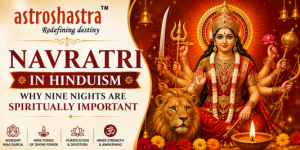
Navratri provides nine nights and days dedicated to the worship of the Goddess. The original page identifies Chaitra Navratri and Sharad Navratri as the two annual Navratri celebrations and connects the festival with the worship of the nine forms of Durga.

The festival can also be approached as a period of spiritual renewal: devotees turn inward, reduce distractions, perform traditional worship, chant mantras and remember the qualities represented by the Divine Mother.

The Nine Forms as Different Expressions of Divine Power

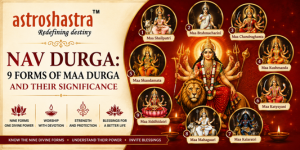
The Navdurga tradition presents nine manifestations of Durga, each carrying a distinct name and spiritual emphasis. The forms range from Shailaputri and Brahmacharini to Kaalratri, Maha Gauri and Siddhidatri.

Taken together, these forms present a broad picture of Shakti: devotion, discipline, courage, creation, motherhood, warrior strength, fearlessness, purity and spiritual fulfillment.

Durga Worship and Inner Transformation

The original page describes Durga as a force that destroys selfishness, hatred, greed, jealousy, ego and injustice. This gives the mythology a direct inner dimension. The obstacles represented by demons can also be contemplated as negative tendencies within the individual.

Remembering Durga can therefore become a daily spiritual practice of developing courage without aggression, strength without arrogance and determination without losing compassion.

Durga in Home and Devotional Practice

Durga can be remembered at home through traditional prayer, devotional reading, mantra recitation and festival worship. The Astroshastra resources associated with her include Durga Yantra, Navdurga resources, Rudraksha products, Durga pendants and devotional literature.

The emphasis should remain on sincere devotion and disciplined practice. Spiritual products may serve as traditional symbols or aids to worship, but they do not replace personal effort, ethical conduct and devotion.

Durga Resources Across Astroshastra

Astroshastra's original Durga page connects Maa with Nine Mukhi Rudraksha, Durga Yantra, Bisa Yantra, Ambajiyan Yantra, Durga Chalisa, Rudraksha Durga Pendant, Parad Idols, Crystal Idols, protection-oriented Rudraksha Mala, Cats Eye, Navdurga Shakti Pendant and Navratri resources.

These resources are preserved as internal navigation so visitors can move directly from the Goddess Durga knowledge page to the corresponding Astroshastra product or information page.

Explore the Divine Power of Maa Durga

Discover Navdurga, Navratri traditions, Durga mantras, sacred Yantras, Rudraksha, devotional resources and Astroshastra's spiritual collection dedicated to the Divine Mother.

Explore Navratri Resources
Divine Wisdom & Blessings

Gods & Goddesses in Hindu Mythology

Explore the divine energies of Hindu deities and discover their spiritual significance, blessings, mantras, and worship traditions.