










Planetary Changes in October 2026: Dates & Effects
Explore planetary changes in October 2026, including Venus retrograde, Sun and Mercury transits, Jupiter's entry into Le...
Read More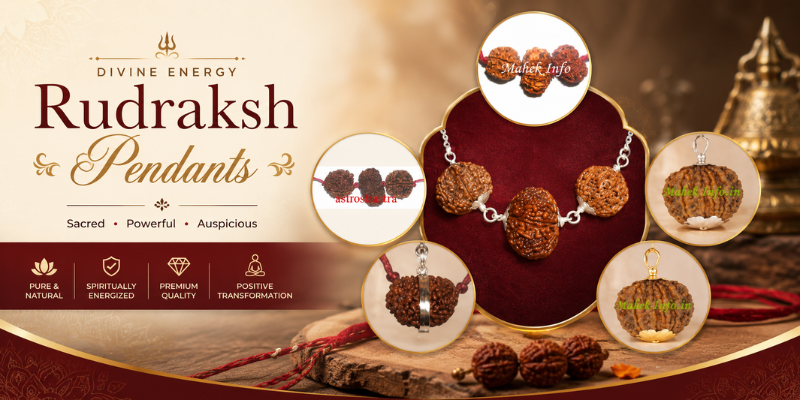
Rudraksha Pendants combine the traditional significance of Rudraksha beads with a convenient form of devotional wearing. They are available in different Mukhi Rudraksha, deity-based designs, planetary combinations and settings with traditional metals or gemstones.
A Rudraksha pendant may be selected for devotional reasons, personal spiritual practice, traditional astrological considerations or simply as a sacred accessory.
This guide explains the different types of Rudraksha Pendants, their traditional associations, how to choose a pendant, how to wear and maintain it, and how Rudraksha can be considered alongside Planets, Nakshatras and Zodiac Signs.
A Rudraksha Pendant is a wearable ornament made using one or more Rudraksha beads, often combined with a metal setting, gemstone or sacred symbol. Rudraksha pendants are traditionally worn around the neck and are popular among devotees and practitioners of Indian spiritual traditions.
The design of a pendant can vary considerably. Some pendants feature a single Rudraksha bead, while others combine Rudraksha with representations of deities, planetary symbols or other sacred motifs.
Rudraksha has an important place in Shaiva and broader Hindu spiritual traditions. Wearing a Rudraksha pendant can therefore have devotional and symbolic significance.
For many people, a pendant serves as a personal reminder of prayer, meditation, faith and spiritual discipline.
The choice of pendant should be based on the individual's purpose and tradition rather than simply selecting a product based on a general claim of benefit.
A single Rudraksha bead mounted in a pendant is one of the simplest forms. The Mukhi of the bead can be selected according to traditional Rudraksha knowledge or personal preference.
Learn more about different Mukhi Rudraksha through our Complete Rudraksha Beads Guide .
Deity-based pendants combine Rudraksha with traditional representations or associations of Hindu deities. Astroshastra's collection includes pendants associated with deities such as Ganesha, Lakshmi, Durga, Hanuman, Saraswati, Shani, Narayan, Kartikeya and others.
Such pendants are generally selected according to devotional preference and traditional symbolism.
Some Rudraksha pendants are designed around the traditional associations between Rudraksha, planets and astrological principles.
For example, Astroshastra offers pendants associated with Surya, Chandra, Mangal, Budh, Shani and other planetary themes.
For a broader understanding, see: Planets in Astrology .
Some pendants combine Rudraksha with natural gemstones. These designs bring together the traditional symbolism of Rudraksha and the astrological traditions associated with gemstones.
If you are considering a gemstone along with Rudraksha, you can also explore our Gemstone Collection .
Rudraksha may also be combined with sacred symbols such as Shiva-related motifs, Ganesha, Om and other traditional designs. These pendants are often chosen for their devotional and symbolic value.
The Mukhi refers to the naturally formed lines or faces visible on a Rudraksha bead. Different Mukhi Rudraksha have different traditional associations.
When selecting a pendant based on Mukhi, it is useful to first understand the characteristics and traditional associations of individual Rudraksha beads.
Explore: Rudraksha Beads – Complete Guide to Mukhi Rudraksha .
Traditional Indian astrology provides several ways of considering Rudraksha, including planetary associations, Nakshatra, zodiac sign and horoscope placement.
| Astrological Factor | Related Astroshastra Guide |
|---|---|
| Planets | Planets in Astrology |
| Nakshatras | Nakshatras in Astrology |
| Zodiac Signs | Sunsigns in Astrology |
| Horoscope Houses | Houses in Horoscope |
| Deities | Gods and Goddesses |
Some Rudraksha traditions associate particular beads with zodiac signs. However, a general zodiac recommendation is different from a personalised horoscope recommendation.
If you want a Rudraksha pendant specifically according to your zodiac sign, you can begin by exploring our Zodiac Signs in Astrology and then study the corresponding Rudraksha associations.
The Nakshatra occupied by the Moon at birth is an important component of Vedic astrology. Traditional Rudraksha recommendations may also consider Nakshatra.
Learn about the 27 Nakshatras here: Nakshatras in Astrology .
For Rudraksha-specific Nakshatra information, visit: Nakshatra and Rudraksha .
Planetary Rudraksha recommendations are based on traditional associations between particular Mukhi beads and planets. Such recommendations can be considered alongside a person's horoscope rather than using the Sun sign alone.
Explore our dedicated guide: Planets and Rudraksha .
Choosing a Rudraksha pendant becomes easier when the purpose of the pendant is clearly defined.
Rudraksha pendants may be mounted in different metals depending on the design. Silver and gold are traditionally popular choices for sacred jewellery.
The choice of metal can be based on design preference, durability, budget and, where relevant, traditional astrological considerations.
A Rudraksha pendant is generally worn around the neck. The pendant should be comfortable and securely attached to its chain or thread.
Those following a particular spiritual tradition may follow additional instructions regarding preparation, purification or wearing.
For traditional guidance, see: Rules for Wearing Rudraksha Beads .
Some devotees traditionally perform a prayer or puja before beginning to wear a Rudraksha. The exact method varies according to family tradition, spiritual lineage and personal practice.
You can read our detailed guide: How Puja of Rudraksha is Performed .
Proper care can help preserve both the Rudraksha bead and the pendant setting.
The authenticity of the Rudraksha bead is more important than the decorative setting of the pendant. Natural Mukhi lines and the physical characteristics of the bead should be examined carefully.
For rare or expensive Rudraksha, professional or laboratory authentication is preferable to relying on a single traditional home test.
Read: Rudraksha Purity and Authenticity .
A Rudraksha pendant is generally designed for convenient devotional wearing, while a Rudraksha Mala may be worn as a longer necklace or used specifically for Japa and mantra counting.
If your primary purpose is mantra Japa, explore our: Rudraksha Mala Collection .
Discover Rudraksha Pendants associated with traditional deities, planets, spiritual practices and sacred symbolism.
Explore Pendant CollectionA Rudraksha Pendant is a wearable ornament made using one or more Rudraksha beads, often combined with a metal setting, gemstone or sacred symbol.
Rudraksha Pendants are traditionally worn for devotional, spiritual and symbolic reasons. They may also be selected according to traditional astrological considerations.
Yes. Traditional recommendations may consider the Rudraksha Mukhi, planets, Nakshatra, zodiac sign and the individual's horoscope.
Many people wear Rudraksha Pendants regularly. The pendant should be handled carefully and protected from unnecessary exposure to chemicals and prolonged moisture.
Yes. Rudraksha Pendants are available in designs combining Rudraksha with gemstones. If the gemstone is being selected for astrological purposes, its suitability should ideally be considered from the individual's horoscope.
The choice depends on your purpose, preferred deity or symbolism, Mukhi Rudraksha, and whether you are seeking traditional astrological guidance.
The Rudraksha bead itself should be examined for natural characteristics and Mukhi lines. For rare or expensive beads, professional authentication is recommended.
Yes. A personalised recommendation can consider the complete horoscope, including planets, houses, zodiac sign and Nakshatra.
Explore planetary changes in October 2026, including Venus retrograde, Sun and Mercury transits, Jupiter's entry into Le...
Read More.png)
Discover the benefits of Lakshmi Ganesh Yantra, its spiritual significance, puja vidhi, placement rules, and how to wors...
Read More
Discover how numerology consultation can help you understand your personality, career, relationships, business prospects...
Read More
Discover how your birth Nakshatra influences luck, fortune, career, wealth, relationships and opportunities. Learn the r...
Read More
Discover the significance of Anant Chaturdashi, its Vrat and Puja Vidhi, Anant Sutra tradition, Lord Vishnu Mantra, ritu...
Read More
Discover the connection between your Nakshatra and lucky numbers in Vedic Astrology. Learn how Nakshatra lords, planetar...
Read More