
Navratri Puja Samagri List – Complete Checklist for Your Home
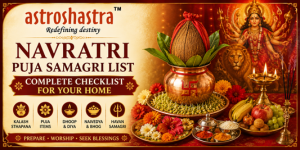
During the nine days of Navratri, devotees perform daily Puja, offer flowers and Naivedya, chant mantras, observe Vrat and worship the Nav Durga, the nine manifestations of Goddess Durga.
Having the right Navratri Puja Samagri prepared before the festival begins makes the worship more organized and allows devotees to concentrate on prayer and devotion.
The exact Puja Samagri can vary according to regional traditions, family customs and the type of Navratri Puja being performed. The following checklist covers the commonly used items for a traditional home Navratri Puja.
Navratri Puja Samagri Checklist
1. Kalash Sthapana Samagri
If you are performing Kalash Sthapana or Ghatasthapana, keep these items ready:
- Kalash – copper, brass or clay
- Clean water
- Ganga Jal
- Mango leaves
- Coconut
- Moli or Kalava
- Red cloth
- Akshat or unbroken rice
- Supari
- Coins
- Durva grass
- Sandalwood
- Flowers
- Kumkum
- Turmeric
- Soil
- Seven types of grains or Sapta Dhanya
- A wide clay pot for sowing grains
The Kalash is traditionally established as a sacred representation of divine energy and is an important part of the beginning of Navratri worship.
Read also: [Navratri Kalash Sthapana – Direction, Samagri, Vidhi & Significance]
2. Maa Durga Puja Samagri
For daily worship of Maa Durga, you can keep:
- Maa Durga idol or framed image
- Red Chunri
- Mauli
- Kumkum
- Roli
- Turmeric
- Akshat
- Sandalwood paste
- Flowers
- Garland
- Durva where traditionally appropriate
- Incense sticks
- Dhoop
- Camphor
- Diya
- Ghee or oil
- Cotton wicks
- Gangajal
- Panchamrit ingredients
- Fruits
- Sweets
- Naivedya
A red cloth or Chunri is traditionally associated with Devi worship and is commonly offered to Maa Durga.
3. Puja Thali
A dedicated Puja Thali can contain the basic items required for daily worship:
- Roli
- Kumkum
- Haldi
- Akshat
- Chandan
- Pushpa
- Moli
- Diya
- Cotton wicks
- Incense
- Camphor
- Small bell
- Aarti lamp
- Naivedya bowl
Keeping these items together makes daily Navratri Puja much easier.
4. Panchamrit Samagri
Panchamrit is traditionally prepared using five ingredients.
Commonly used ingredients include:
- Milk
- Curd
- Ghee
- Honey
- Sugar
Some families also add Tulsi leaves or other ingredients according to their tradition.
Panchamrit may be used as part of the ritual offerings where appropriate.
5. Abhishek Samagri
If your family tradition includes Abhishek of the deity, keep:
- Clean water
- Gangajal
- Milk
- Curd
- Honey
- Ghee
- Sugar
- Panchamrit
- Sandalwood
- Flowers
The exact Abhishek procedure should follow the tradition being observed, particularly when worshipping a specific form of Devi.
6. Flowers and Leaves
Flowers are an important part of Navratri worship.
You can keep:
- Fresh flowers
- Flower garlands
- Lotus where available
- Marigold
- Rose
- Jasmine
- Other locally available fresh flowers
The flowers offered to Maa Durga can vary according to the form of Devi being worshipped and regional tradition.
The most important principle is to offer fresh and clean flowers with devotion.
7. Dhoop, Diya and Aarti Samagri
For the daily evening Puja and Aarti, keep:
- Diya
- Ghee or sesame oil
- Cotton wicks
- Camphor
- Dhoop
- Incense sticks
- Matchbox or lighter
- Aarti Thali
- Bell
Lighting a diya is traditionally associated with removing darkness and invoking auspiciousness and divine awareness.
8. Naivedya and Bhog Samagri
Food offerings can be prepared according to the devotee's family tradition.
Common offerings include:
- Fruits
- Mishri
- Dry fruits
- Sweets
- Kheer
- Halwa
- Coconut
- Bananas
- Apples
- Pomegranate
- Seasonal fruits
During Navratri Vrat, devotees generally prepare Vrat-friendly food according to their regional and family practices.
9. Navratri Vrat Samagri
If you are observing Navratri fasting, you may want to keep:
- Sabudana
- Kuttu flour
- Singhara flour
- Rajgira
- Samak rice
- Rock salt or Sendha Namak
- Potatoes
- Fruits
- Milk
- Curd
- Dry fruits
- Makhana
- Peanuts
Fasting rules vary considerably between traditions. Therefore, devotees should follow their own family or religious tradition rather than assuming that every item is universally permitted.
10. Havan Samagri
If you are performing Navratri Havan, additional items may be required:
- Havan Kund
- Havan Samagri
- Ghee
- Camphor
- Mango wood or appropriate Havan wood
- Dried coconut
- Barley
- Sesame seeds
- Rice
- Samidha
- Flowers
- Kalava
- A small spoon for offering ghee
The exact Havan Samagri and Mantras depend on the Puja tradition being followed.
11. Durga Saptashati / Devi Mahatmya
Many devotees read or listen to Durga Saptashati, also known as Devi Mahatmya, during Navratri.
If you plan to perform daily recitation, keep:
- Durga Saptashati book
- Puja cloth
- Chandan
- Flowers
- Diya
- Incense
It is helpful to maintain a clean and dedicated place for the scripture.
12. Nav Durga Puja Items
During the nine days, devotees worship:
- Maa Shailputri
- Maa Brahmacharini
- Maa Chandraghanta
- Maa Kushmanda
- Maa Skandamata
- Maa Katyayani
- Maa Kalaratri
- Maa Mahagauri
- Maa Siddhidatri
The offerings and associated rituals may differ according to regional traditions.
Therefore, you do not necessarily need to purchase nine completely different sets of Puja items.
A basic, clean and devotional Puja arrangement can be used throughout the nine days.
13. Kanya Puja Samagri
If you perform Kanya Puja or Kanjak Puja on Ashtami or Navami, you may prepare:
- Halwa
- Puri
- Black chickpeas
- Fruits
- Sweets
- Gifts
- Chunri
- Bangles
- Kumkum
- Flowers
The tradition of Kanya Puja varies by region and family.
Young girls are traditionally honoured as manifestations of the Divine Feminine.
Complete Navratri Puja Shopping Checklist
For convenience, here is a consolidated list.
Puja Essentials
- Maa Durga idol or picture
- Puja Chowki
- Red cloth
- Kalash
- Coconut
- Mango leaves
- Moli
- Gangajal
- Akshat
- Kumkum
- Roli
- Haldi
- Chandan
- Supari
- Coins
- Durva
- Flowers
- Garland
Lighting and Fragrance
- Diya
- Ghee or oil
- Cotton wicks
- Camphor
- Dhoop
- Incense sticks
- Matchbox
- Bell
Food and Offerings
- Fruits
- Dry fruits
- Sweets
- Mishri
- Coconut
- Panchamrit ingredients
- Naivedya
Kalash Sthapana
- Clay pot
- Clean soil
- Sapta Dhanya
- Kalash
- Water
- Mango leaves
- Coconut
- Red cloth
- Moli
- Supari
- Coins
Havan
- Havan Kund
- Havan Samagri
- Ghee
- Samidha
- Sesame
- Barley
- Rice
- Dried coconut
- Camphor
Kanya Puja
- Halwa
- Puri
- Black chickpeas
- Fruits
- Sweets
- Gifts
- Chunri
- Bangles
How to Organize Your Navratri Puja Samagri
A simple way to prepare for Navratri is to divide the Samagri into four separate groups.
Group 1 – Daily Puja
Keep flowers, Kumkum, Chandan, Akshat, incense, diya, camphor and Naivedya together.
Group 2 – Kalash Sthapana
Keep the Kalash, coconut, leaves, Moli, soil, grains and other Ghatasthapana items separately.
Group 3 – Havan
Keep Havan Samagri, Ghee, Samidha and Havan Kund together if Havan is part of your tradition.
Group 4 – Kanya Puja
Keep the food, gifts and other offerings for Ashtami or Navami separately.
This simple organization prevents last-minute shopping during the nine days.
What Is the Most Important Item in Navratri Puja?
While many traditional items are used in Navratri Puja, the essence of the worship is devotion, cleanliness, faith and sincere Sankalpa.
It is not necessary to become anxious if a particular traditional item is unavailable. Puja practices differ across regions and families.
A simple Puja performed with Shraddha and Bhakti can be spiritually meaningful.
Navratri Puja at Home
A basic home Navratri routine can include:
Morning
- Clean the Puja area
- Light a diya
- Offer flowers
- Worship Maa Durga
- Chant your chosen Devi Mantra
- Read or listen to Devi scriptures if part of your tradition
Evening
- Light diya and incense
- Offer Naivedya
- Perform Maa Durga Aarti
- Spend a few minutes in prayer or meditation
The nine days can become an opportunity for self-discipline, devotion and spiritual reflection rather than simply following rituals mechanically.
Spiritual Significance of Navratri Puja Samagri
The individual Puja items used during Navratri have symbolic meaning.
Kalash represents life and abundance.
Coconut represents auspiciousness and completeness.
Leaves represent vitality and nature.
Flowers represent devotion and purity.
Diya represents divine light and the removal of darkness.
Incense represents purification and the elevation of prayer.
Akshat represents wholeness and auspiciousness.
Red cloth is traditionally associated with Shakti and Devi worship.
Together, these objects transform an ordinary space into a sacred environment for worship and contemplation.
Preparing your Navratri Puja Samagri in advance allows you to observe the nine sacred days with greater peace and concentration.
From the Kalash and coconut to flowers, diya, incense, Naivedya, Havan Samagri and Kanya Puja items, each element has a traditional place in the worship of Maa Durga.
However, the most important part of Navratri is not the number of items collected. It is the devotion, discipline, purity of intention and spiritual awareness with which the Puja is performed.
May Maa Durga bless your home with strength, peace, prosperity, protection and spiritual growth.
Jai Mata Di!