
Chakra Marks in Shaligram and Their Meaning
Discover the meaning of chakra marks in Shaligram stones. Learn how different chakra patterns identify various forms of ...
Read MoreDiscover sacred Shaligram stones traditionally worshipped as a divine form of Lord Vishnu. Explore authentic Small, Big, Auspicious, Rare and Exotic Shaligrams for your home temple, spiritual space, daily puja and devotional practice.
Shaligram is one of the most sacred stones in Hindu tradition and is worshipped as a divine form of Lord Vishnu. Found mainly in the Gandaki River region of Nepal, Shaligram stones are known for their natural chakra marks, unique shapes, and powerful spiritual significance.
At Astroshastra, you can explore a beautiful collection of small, big, auspicious, rare, and exotic Shaligrams for worship, positivity, protection, prosperity, and spiritual growth.
Keeping a Shaligram at home, temple, office, or spiritual place is traditionally believed to invite divine blessings, peace, purity, and positive vibrations. Devotees worship Shaligram with Tulsi leaves, water, flowers, incense, and Vishnu mantras to receive the grace of Lord Vishnu and Goddess Lakshmi.
Our Shaligram collection includes different sacred forms suitable for daily puja, temple worship, spiritual remedies, and Vastu energy balancing.
Shaligram is considered highly auspicious in Vedic tradition. It is traditionally associated with purity, protection, prosperity, peace and spiritual upliftment.
Traditionally associated with the divine blessings of Lord Vishnu and Goddess Lakshmi.
Traditionally kept to encourage peaceful, positive and harmonious vibrations at home.
Associated in traditional belief with wealth, prosperity, abundance and good fortune.
Traditionally considered auspicious for protection and spiritual well-being.
The shilas are specifically described as fossil-stones which have taken shape in the Gandaki River and are characterized by the presence of discus marks.
They are naturally found in the river Gandaki. These also include the famous Kali-Gandaki River, Muktinath, Damodar Himal, Damodar Kunda, Devghat, and other sacred regions associated with the traditional Shaligram pilgrimage.
Salagrams are sacred 'shilas' or stones representing the abstract form of Lord Vishnu. His followers, the Hindu Vaishnavas, place these stones in their puja altars for daily worship.
Just as the abstract form of Shiva is the stone lingam which the Shaivites worship in their temples and homes, so is the Shila regarded as a sacred representation of Lord Vishnu.
According to Hindu tradition, it is the shelter for a small insect known as the 'vajra-keeta' that cuts through this stone and lives inside it.
In actuality, however, these stones are fossils of the common ammonite that lived millions of years ago when the Himalayan mountain range formed the bed of a vast ocean floor.
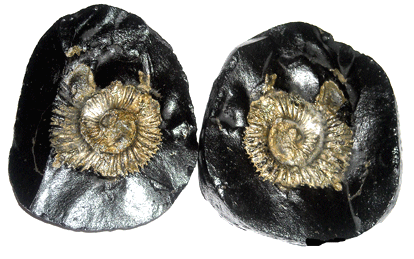
The marks made by the shell of the ammonite give it its characteristic appearance, with the pattern often resembling and representing the 'Sudarshan Chakra' or the discus with a sharp-toothed edge which rests on the index finger of Lord Vishnu.
These come in different colors such as red, blue, yellow, green and black. Of these, the yellow, blue and black varieties are considered more sacred in traditional belief. The yellow and golden-colored varieties are considered especially auspicious and are traditionally believed to bestow wealth and prosperity upon their worshippers.
Shaligrams are found in different shapes and are often associated with different avatars or incarnations of Lord Vishnu such as Matsya Avatar, Kurma Avatar, Narasimha Avatar and others.
In the epic Mahabharata, Lord Krishna, while giving a discourse to Yudhishtra, refers to the qualities of Shilas.
Wherever it is kept, Lord Vishnu is traditionally believed to live there along with Goddess Laxmi. The umbrella-shaped Shilas are traditionally associated with kingship and authority, while elliptical-shaped Shilas are associated with wealth and abundance.
It is traditionally believed to purify a person and bring success in different walks of life. The spiritual merit described in traditional accounts compares its worship with the benefits obtained through Vedic study and penance.
Performing Abhishek with water is traditionally believed to bring benefits, happiness and spiritual purification.
Traditional belief holds that the worship of Shaligram creates an especially sacred connection with Lord Vishnu and that devotional worship, Abhishek and mantra practice are important parts of its spiritual significance.
Traditional accounts also associate Shaligram worship with purification and liberation, reflecting the deep spiritual importance given to these sacred stones in Vaishnava tradition.
Shaligram worship should be done with devotion, cleanliness, and respect. Place the Shaligram in your puja room or temple on a clean plate or altar.
Offer pure water, Tulsi leaves, sandalwood paste, flowers, incense, and a diya. Chant Vishnu mantras such as “Om Namo Bhagavate Vasudevaya” or “Om Namo Narayanaya” while worshipping.
Regular Shaligram puja is traditionally believed to create a peaceful and spiritually charged atmosphere in the home. Avoid placing Shaligram in unclean areas and always handle it with devotion.
Original Shaligram stones are naturally formed and usually have chakra-like markings, spiral impressions, or unique fossil patterns.
They are generally black or dark in color and may have a naturally smooth or textured surface. Since every Shaligram is unique, its size, shape, markings and natural formation may vary considerably.
The characteristic natural markings are one of the most important visual features associated with Shaligram stones. Traditional devotees particularly value natural chakra impressions and distinctive formations.
While buying a Shaligram, always choose a trusted spiritual source. At Astroshastra, we focus on offering carefully selected Shaligram stones with clear product images and appropriate spiritual guidance.
Different devotees choose different types of Shaligram according to their worship purpose, available sacred space, personal spiritual practice and traditional beliefs.
Small Shaligrams are easy to keep in home temples, while big Shaligrams are suitable for larger puja spaces, temples and spiritual centers.
Rare and exotic Shaligrams are valued for their special natural markings, unusual formations, distinctive chakra patterns and spiritual importance.
Astroshastra offers different collections so devotees and collectors can explore Shaligrams according to their individual requirements.
Shaligram is a sacred stone worshipped as a divine form of Lord Vishnu in Hindu tradition.
Yes, Shaligram can be kept at home in the puja room or temple with proper respect, cleanliness and regular worship.
Lakshmi Narayan Shaligram and auspicious chakra Shaligrams are commonly associated with prosperity, wealth and harmony.
Shaligram may be worshipped with water, Tulsi leaves, flowers, incense, diya, sandalwood paste and Vishnu mantras.
Yes, many people keep Shaligram for positive energy, protection, peace and spiritual balance in the home or workplace.
Yes, when purchased from verified and reliable sellers offering appropriate product details and authenticity information.
It is traditionally best placed in the puja room, temple or another clean and sacred corner.
Look for natural fossil markings and characteristic chakra-like formations, and purchase from a trusted source.
Yes. Simple devotion, cleanliness and sincere prayers are considered sufficient for devotional worship.
Discover sacred and spiritually powerful Shaligram stones ranging from small worship Shaligrams to rare and exotic divine forms associated with Lord Vishnu, prosperity, protection, spiritual growth and positivity.
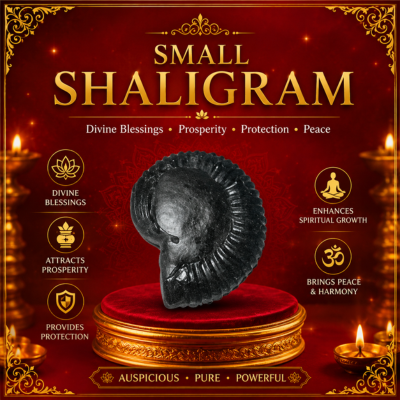
Compact and easy-to-worship Shaligrams ideal for home temples, daily puja, travel altars and spiritual practices.
View Collection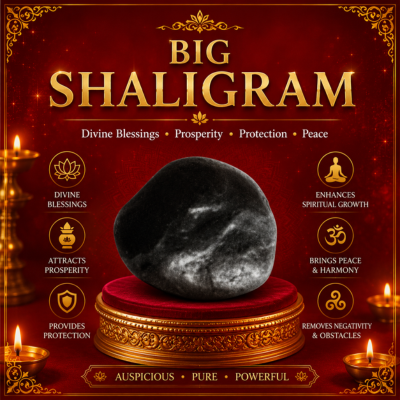
Large divine Shaligram stones for temples, spiritual centers, Vastu energy balancing and powerful worship rituals.
View Collection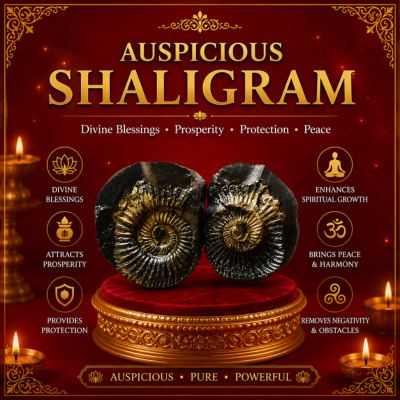
Sacred Shaligrams associated with prosperity, wealth, spiritual blessings, peace, positivity and divine protection.
View Collection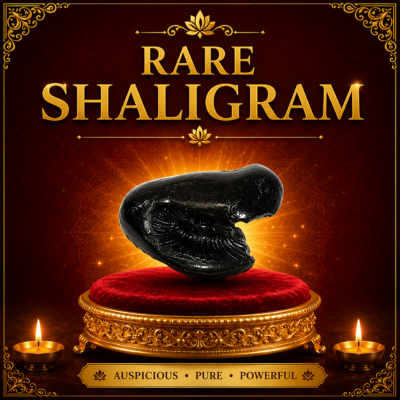
Rarely found Shaligram forms with unique chakra markings and special spiritual significance in Vedic traditions.
View Collection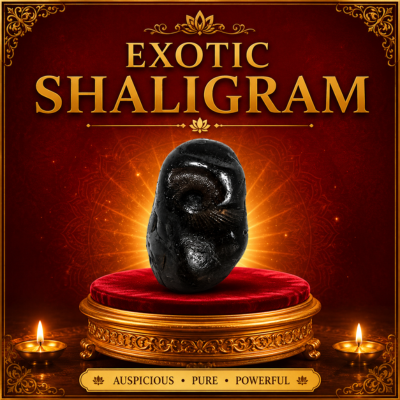
Extraordinary and visually unique Shaligram stones prized for their beauty, rarity, spiritual energy and divine symbolism.
View CollectionExplore Astroshastra's collection of Small, Big, Auspicious, Rare and Exotic Shaligrams and find a sacred stone suited to your spiritual space and devotional practice.
Explore All ShaligramsDiscover sacred and spiritually powerful Shaligram stones ranging from small worship Shaligrams to rare and exotic divine forms associated with Lord Vishnu, prosperity, protection, spiritual growth, and positivity.
Compact and easy-to-worship Shaligrams ideal for home temples, daily puja, travel altars, and spiritual practices.
View Collection
Large divine Shaligram stones for temples, spiritual centers, vastu energy balancing, and powerful worship rituals.
View Collection
Sacred Shaligrams associated with prosperity, wealth, spiritual blessings, peace, positivity, and divine protection.
View Collection
Rarely found Shaligram forms with unique chakra markings and special spiritual significance in Vedic traditions.
View Collection
Extraordinary and visually unique Shaligram stones prized for their beauty, rarity, spiritual energy, and divine symbolism.
View Collection
Discover the meaning of chakra marks in Shaligram stones. Learn how different chakra patterns identify various forms of ...
Read More
Learn how to identify original Shaligram stone with simple tests, spiritual signs, chakra patterns, and expert tips. Dis...
Read More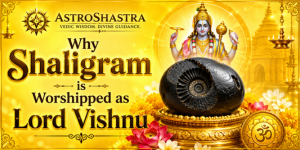
Discover why Shaligram is worshipped as Lord Vishnu in Hinduism. Learn about the spiritual significance, origin, benefit...
Read More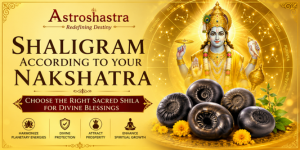
Discover how to choose the ideal Shaligram according to your Nakshatra. Learn the spiritual significance, benefits, reco...
Read More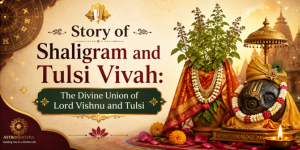
Discover the divine story of Shaligram and Tulsi Vivah. Learn how Goddess Tulsi (Vrinda) became the sacred Tulsi plant, ...
Read More
Discover 7 spiritual lessons from Lord Rama’s victory over Ravana and learn the deeper meaning of Dussehra 2026, Dharm...
Read More