
Importance of Child Birth Muhurat | Auspicious Birth Time in Vedic Astrology
Discover the importance of Child Birth Muhurat in Vedic astrology. Learn how Tithi, Nakshatra, Lagna, Panchang and planetary ...
Read MoreMusic has long been used in Indian spiritual and devotional settings, while Jyotisha traditions sometimes recommend mantra, stotra, worship or other practices in relation to planetary symbolism. When these ideas meet, music can become a traditional contemplative practice. This page distinguishes devotional practice from medical claims and from the idea that listening to one raga guarantees a planetary result.
Mantra, stotra, bhajan, kirtan and classical raga occupy different musical and devotional categories, but they can overlap in practice. A practitioner may sing a devotional text in a raga, listen to a graha kriti, or use repeated chanting as a contemplative discipline. The intention, pronunciation, attention and regularity of practice can be more important to the tradition than simply naming a raga.
| Graha | Traditional composition | Raga | Possible study theme |
|---|---|---|---|
| Sun | Suryamurthe Namostute | Saurashtra | Study the graha symbolism through actual repertoire |
| Moon | Chandram Bhaja Manasa | Asaveri | Study the graha symbolism through actual repertoire |
| Mars | Angarakamasrayamyaham | Surati | Study the graha symbolism through actual repertoire |
| Mercury | Budhamashrayami | Nattakurinji | Study the graha symbolism through actual repertoire |
| Jupiter | Brihaspate Tarapate | Atana | Study the graha symbolism through actual repertoire |
| Venus | Sri Sukra Bhagavantam | Paraju / Paras | Study the graha symbolism through actual repertoire |
| Saturn | Divakara Tanujam | Yadukulakambhoji | Study the graha symbolism through actual repertoire |
| Rahu | Smaramyaham Sada Rahum | Ramapriya / Ramamanohari | Study the graha symbolism through actual repertoire |
| Ketu | Mahasuram Ketumaham | Shanmukhapriya / Chamaram | Study the graha symbolism through actual repertoire |
Miyan Ki Malhar is a useful reminder that raga is connected with context as well as notes. Its monsoon identity, characteristic phrases and performance tradition make it more meaningful to study as a complete musical system than as a symbolic “rain remedy.” The same principle applies to planetary music: understand the raga before assigning astrological meaning.
Music may support reflection, devotion, concentration or emotional engagement, but this page does not claim that a raga treats disease or replaces medical or psychological care. Likewise, an astrological musical practice should not replace professional musical training.
No. They vary between traditions, schools, lineages and sources. Astroshastra presents them as traditional interpretive associations.
Not necessarily. Film composers may simplify, combine or adapt raga phrases for melody, lyrics, rhythm and cinematic expression.
Yes. In fact, learning the raga, its aroha–avaroha, pakad, vadi–samvadi where applicable, tala, time and repertoire provides the musical foundation before adding an astrological interpretation.
Music can be studied as a rich artistic tradition while a horoscope provides a separate Jyotisha framework. For a personalized interpretation, consider the complete birth chart rather than one isolated planet or raga.
Horoscope Consultation
Discover the importance of Child Birth Muhurat in Vedic astrology. Learn how Tithi, Nakshatra, Lagna, Panchang and planetary ...
Read More
Can astrology really predict lottery wins? Discover what Vedic astrology says about sudden wealth, lottery luck, planetary co...
Read More
Learn how donation (Daan) helps reduce the effects of Pitra Dosha according to Vedic astrology. Discover the importance of ch...
Read More
Discover how Astrology and Ayurveda work together to promote holistic health. Learn about planetary influences, doshas, Rudra...
Read More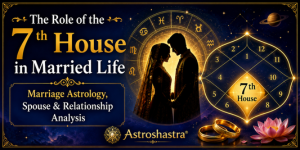
Discover the role of the 7th House in married life according to Vedic astrology. Learn how the 7th House, its lord, planets, ...
Read More
Discover the symptoms, causes and effective Vedic remedies for Pitra Dosha. Learn how ancestral karma affects your life and w...
Read More