





Onam Festival – Kerala’s Grand Celebration of Harvest & Heritage
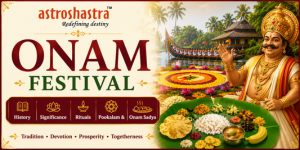
Onam is the biggest and most vibrant harvest festival of Kerala, celebrated with great enthusiasm across the state. This 10-day-long festival falls in the Malayalam month of Chingam (August–September) and marks the homecoming of the beloved King Mahabali, under whose reign Kerala witnessed prosperity and happiness. Onam also celebrates the annual rice harvest, showcasing Kerala’s rich cultural heritage through elaborate feasts, folk dances, games, and floral decorations.
Significance of Onam
According to legend, King Mahabali was a benevolent Asura ruler who loved his people deeply. His growing popularity made the gods jealous, and Lord Vishnu took his Vamana avatar to push Mahabali to the underworld. However, impressed by his devotion, Vishnu granted him permission to visit his people once every year — a day celebrated as Onam. The festival is therefore a symbol of good governance, unity, and prosperity.
Major Traditions & Rituals of Onam
1. Pookalam (Floral Rangoli)
People decorate their courtyards with colourful flower carpets called Pookalam, beginning on Atham day and adding layers until Thiruvonam, the main day of celebration.
2. Onasadya (Grand Feast)
A traditional vegetarian meal served on a banana leaf containing 26–30 dishes including avial, sambar, olan, kalan, and the beloved dessert payasam. Onasadya reflects abundance and hospitality.
3. Vallam Kali (Snake Boat Race)
Famous across the world, the snake-boat race on the backwaters of Kerala is an iconic part of Onam celebrations, especially the Nehru Trophy boat race.
4. Traditional Folk Arts
Performances like Pulikali (tiger dance), Thiruvathira, Kathakali, and Kummattikali create a festive atmosphere. Games such as tug-of-war, archery, and Onakalikal are played in villages and temples.
5. New Clothes (Onakkodi)
It is a custom to wear new traditional attire on Onam — Kasavu mundu / saree for women and dhoti for men, signifying purity and renewal.
Festivities Across Ten Days
The celebrations begin on Atham and reach their peak on Thiruvonam (the main day), followed by Avittam and Chathayam. Each day has unique customs, with temples conducting special prayers, processions, and cultural displays.
Significance of Onam
According to legend, King Mahabali was a benevolent Asura ruler who loved his people deeply. His growing popularity made the gods jealous, and Lord Vishnu took his Vamana avatar to push Mahabali to the underworld. However, impressed by his devotion, Vishnu granted him permission to visit his people once every year — a day celebrated as Onam. The festival is therefore a symbol of good governance, unity, and prosperity.
Major Traditions & Rituals of Onam
1. Pookalam (Floral Rangoli)
People decorate their courtyards with colourful flower carpets called Pookalam, beginning on Atham day and adding layers until Thiruvonam, the main day of celebration.
2. Onasadya (Grand Feast)
A traditional vegetarian meal served on a banana leaf containing 26–30 dishes including avial, sambar, olan, kalan, and the beloved dessert payasam. Onasadya reflects abundance and hospitality.
3. Vallam Kali (Snake Boat Race)
Famous across the world, the snake-boat race on the backwaters of Kerala is an iconic part of Onam celebrations, especially the Nehru Trophy boat race.
4. Traditional Folk Arts
Performances like Pulikali (tiger dance), Thiruvathira, Kathakali, and Kummattikali create a festive atmosphere. Games such as tug-of-war, archery, and Onakalikal are played in villages and temples.
5. New Clothes (Onakkodi)
It is a custom to wear new traditional attire on Onam — Kasavu mundu / saree for women and dhoti for men, signifying purity and renewal.
Festivities Across Ten Days
The celebrations begin on Atham and reach their peak on Thiruvonam (the main day), followed by Avittam and Chathayam. Each day has unique customs, with temples conducting special prayers, processions, and cultural displays.