Nakshatras are the soul of Vedic astrology, offering a deeper and more personalized understanding of your life than zodiac signs alone. By knowing your Nakshatra, you can unlock insights into your emotions, destiny, and spiritual journey.
If you truly want to understand your horoscope, start with your Nakshatra—it reveals who you are at your core.
What Are Nakshatras?
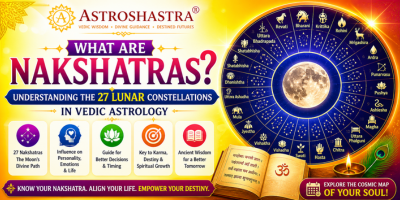
Nakshatras are the 27 lunar constellations in Vedic astrology that divide the zodiac into smaller segments. While the zodiac signs (Rashis) are based on the Sun, Nakshatras are deeply connected to the Moon’s movement, making them highly important for understanding emotions, behavior, and life patterns.
Each Nakshatra spans 13 degrees and 20 minutes of the zodiac and plays a crucial role in shaping a person’s personality, destiny, and karmic path.
Why Are Nakshatras Important in Astrology?
Nakshatras provide deeper insights than zodiac signs alone. While your Sun sign reflects your outer personality, your Nakshatra—based on your Moon’s position at birth—reveals:
- Emotional tendencies
- Mental patterns
- Hidden strengths and weaknesses
- Relationship compatibility
- Career inclinations
- Spiritual path
In fact, many Vedic astrologers prioritize Nakshatras over zodiac signs for accurate predictions.
The 27 Nakshatras List
Here are the 27 Nakshatras in order:
- Ashwini
- Bharani
- Krittika
- Rohini
- Mrigashira
- Ardra
- Punarvasu
- Pushya
- Ashlesha
- Magha
- Purva Phalguni
- Uttara Phalguni
- Hasta
- Chitra
- Swati
- Vishakha
- Anuradha
- Jyeshtha
- Mula
- Purva Ashadha
- Uttara Ashadha
- Shravana
- Dhanishta
- Shatabhisha
- Purva Bhadrapada
- Uttara Bhadrapada
- Revati
Each Nakshatra is ruled by a planet (Graha) and has its own symbol, deity, and energy.
How Nakshatras Are Determined
Your Nakshatra is calculated based on the position of the Moon at the time of your birth. This is why:
- Accurate date, time, and place of birth are essential
- Even a slight time difference can change your Nakshatra
You can find your Nakshatra using a birth chart (Kundli) or online astrology calculator.
Structure of a Nakshatra
Each Nakshatra is divided into 4 padas (quarters), making a total of 108 padas across all Nakshatras. These padas are linked to:
- Navamsa chart (D9 chart)
- Specific personality traits
- Life events and karmic influences
Key Elements of Nakshatras
Every Nakshatra has unique attributes:
1. Ruling Planet (Nakshatra Lord)
Determines how the Nakshatra expresses its energy.
2. Deity (Devata)
Represents the spiritual force behind the Nakshatra.
3. Symbol
Gives insight into its core nature.
4. Guna (Quality)
- Sattva (pure)
- Rajas (active)
- Tamas (inert)
5. Gana (Nature)
- Deva (divine)
- Manushya (human)
- Rakshasa (demonic)
Nakshatras and Personality
Your birth Nakshatra influences your:
- Thinking style
- Emotional reactions
- Decision-making patterns
- Natural talents
For example:
- Rohini Nakshatra natives are creative and charming
- Ashlesha Nakshatra individuals are intuitive and mysterious
- Magha Nakshatra people often have leadership qualities
Nakshatras in Marriage Compatibility
Nakshatras play a major role in Kundli matching (Guna Milan). Astrologers compare Nakshatras of partners to evaluate:
- Emotional compatibility
- Longevity of relationship
- Harmony and understanding
Nakshatras and Muhurat (Auspicious Timing)
Choosing the right Nakshatra is essential for important events like:
- Marriage
- Business launch
- Housewarming (Griha Pravesh)
- Travel
Certain Nakshatras are considered highly auspicious, such as Pushya, Rohini, and Uttara Phalguni.
Spiritual Significance of Nakshatras
Nakshatras are not just astronomical divisions—they represent cosmic energies and karmic patterns. Understanding your Nakshatra can help you:
- Align with your life purpose
- Improve decision-making
- Perform effective remedies (like mantras, gemstones, or Rudraksha)
READ MORE ON NAKSHTRAS..

Comments