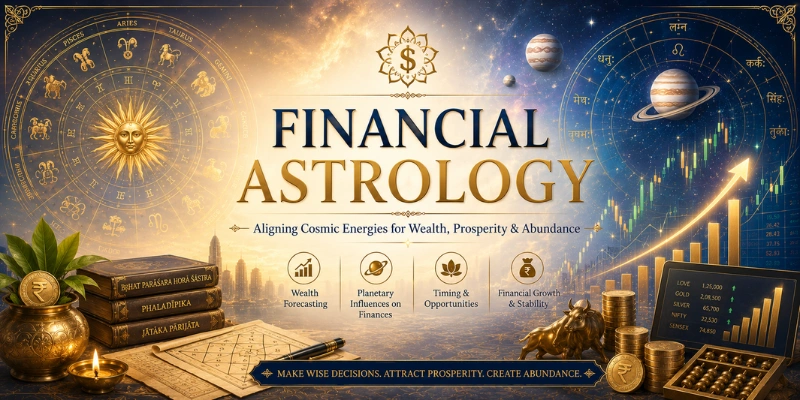
A detailed guide to using Nakshatras, lunar mansions and Moon-based timing in traditional financial astrology research.
Key Takeaways
- Define the market instrument and forecast period before interpreting any planetary signal.
- Combine long-cycle planets, faster transits and relevant Vedic timing factors instead of relying on one placement.
- Separate a possible market scenario from a guaranteed price prediction.
- Validate the method historically and compare it with financial, economic and risk-management information.
- Why Nakshatras Matter in Vedic Financial Astrology
- The Moon's Nakshatra
- Planetary Nakshatras
- Nakshatra Lords and Timing
- Transit Through Important Nakshatras
- Nakshatra and Market Sentiment
- Combining Nakshatra With Dasha
- Nakshatra-Based Muhurta Research
- Historical Testing
- Common Nakshatra Prediction Mistakes
- Practical Research Checklist
Why Nakshatras Matter in Vedic Financial Astrology
Nakshatras provide a finer division of the zodiac and are an important part of Vedic astrology. In financial astrology research, they can be used to add detail to Moon-based timing or to study the Nakshatra occupied by an important planetary point.
The practical value comes from combining Nakshatra information with larger factors such as houses, planetary periods and transits. A Nakshatra should add nuance to the interpretation rather than become a standalone prediction rule.
The Moon's Nakshatra
The Moon is often used in Vedic timing because of its rapid movement and association with changing emotional and public sentiment. Lunar analysis can therefore be used to identify short observation windows, especially when combined with Nakshatra and other planetary factors.
Because the Moon changes quickly, lunar signals should not be allowed to override the broader market cycle without supporting evidence. A short-term Moon indication is better described as a timing or observation window than as a guaranteed price signal.
Planetary Nakshatras
Nakshatras provide a finer division of the zodiac and are an important part of Vedic astrology. In financial astrology research, they can be used to add detail to Moon-based timing or to study the Nakshatra occupied by an important planetary point.
The practical value comes from combining Nakshatra information with larger factors such as houses, planetary periods and transits. A Nakshatra should add nuance to the interpretation rather than become a standalone prediction rule.
Nakshatra Lords and Timing
Nakshatras provide a finer division of the zodiac and are an important part of Vedic astrology. In financial astrology research, they can be used to add detail to Moon-based timing or to study the Nakshatra occupied by an important planetary point.
The practical value comes from combining Nakshatra information with larger factors such as houses, planetary periods and transits. A Nakshatra should add nuance to the interpretation rather than become a standalone prediction rule.
Transit Through Important Nakshatras
Nakshatras provide a finer division of the zodiac and are an important part of Vedic astrology. In financial astrology research, they can be used to add detail to Moon-based timing or to study the Nakshatra occupied by an important planetary point.
The practical value comes from combining Nakshatra information with larger factors such as houses, planetary periods and transits. A Nakshatra should add nuance to the interpretation rather than become a standalone prediction rule.
Nakshatra and Market Sentiment
Nakshatras provide a finer division of the zodiac and are an important part of Vedic astrology. In financial astrology research, they can be used to add detail to Moon-based timing or to study the Nakshatra occupied by an important planetary point.
The practical value comes from combining Nakshatra information with larger factors such as houses, planetary periods and transits. A Nakshatra should add nuance to the interpretation rather than become a standalone prediction rule.
Combining Nakshatra With Dasha
Nakshatras provide a finer division of the zodiac and are an important part of Vedic astrology. In financial astrology research, they can be used to add detail to Moon-based timing or to study the Nakshatra occupied by an important planetary point.
The practical value comes from combining Nakshatra information with larger factors such as houses, planetary periods and transits. A Nakshatra should add nuance to the interpretation rather than become a standalone prediction rule.
Nakshatra-Based Muhurta Research
Historical testing is essential when studying nakshatra stock market prediction. Write the rule before checking the market outcome. Record the chart or Panchang factor, the observation window, the expected behaviour and what would count as a failed prediction. Only then compare the result with historical market data.
A useful research journal should record false positives as carefully as successes. If a rule is changed after every unsuccessful example, the resulting track record becomes misleading. Testing should also distinguish direction, magnitude and volatility because a small sideways market and a major reversal are not equivalent outcomes.
Historical Testing
Historical testing is essential when studying nakshatra stock market prediction. Write the rule before checking the market outcome. Record the chart or Panchang factor, the observation window, the expected behaviour and what would count as a failed prediction. Only then compare the result with historical market data.
A useful research journal should record false positives as carefully as successes. If a rule is changed after every unsuccessful example, the resulting track record becomes misleading. Testing should also distinguish direction, magnitude and volatility because a small sideways market and a major reversal are not equivalent outcomes.
Common Nakshatra Prediction Mistakes
One of the most common mistakes in nakshatra stock market prediction is treating one astrological factor as a complete forecast. A planet can have several meanings, and its effect depends on sign, house, lordship, aspects, dignity and the other factors active at the same time.
Another mistake is ignoring the market itself. Earnings, valuation, interest rates, liquidity, regulation, geopolitical events and unexpected news can dominate price behaviour. Astrology should therefore be presented as a traditional interpretive tool, not as a replacement for financial evidence or risk management.
Practical Research Checklist
Use a written research checklist before making the forecast. Record the instrument, reference chart, start and end dates, planetary factors, relevant houses, expected scenario and invalidation condition. Then record what actually happened. This makes the article useful as an evergreen methodology guide rather than a one-time prediction.
For investors, the checklist should also include conventional evidence: company or index fundamentals, valuation, macroeconomic conditions, liquidity, major corporate or policy events, position size and maximum acceptable loss. The astrological interpretation should remain a separate layer so that a symbolic signal does not override financial suitability.
Astroshastra Editorial Note
This article presents traditional Vedic astrology concepts as an educational framework for financial-market study. Astrology is not a scientifically established method for predicting security prices or guaranteed investment returns. Readers should use independent financial research and appropriate professional advice before making investment decisions.
Nakshatras for Stock Market Prediction – FAQs
Common questions about nakshatra stock market prediction and traditional financial astrology.
What is the role of Nakshatras for Stock Market Prediction?
It is one traditional interpretive layer within financial astrology. It should be studied with the relevant chart, timing period and other planetary factors rather than used as a guaranteed market signal.
Can this method predict an exact stock price?
No. Astrology does not provide a reliable basis for guaranteeing an exact price level. Price, volume, fundamentals, liquidity and unexpected news must also be considered.
Should this method be used for trading decisions?
It can be studied as a personal or traditional timing framework, but it should not replace financial analysis, risk management or professional advice.
How can the method be tested?
Define the rule and time window before looking at the outcome, then compare the prediction with historical market data and record both successes and failures.
What is the most important principle?
Use multiple relevant factors, define the forecast clearly, acknowledge uncertainty and never present an astrological interpretation as a guaranteed financial result.