
Ashtavinayak: The Eight Sacred Forms of Lord Ganesha in Maharashtra
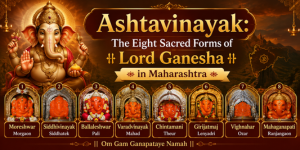
Among the countless temples dedicated to Ganesha throughout India, the Ashtavinayak Temples of Maharashtra hold a special place in Hindu spirituality.
The word Ashtavinayak is derived from two Sanskrit words: Ashta meaning eight and Vinayak meaning Lord Ganesha. Together, Ashtavinayak refers to the eight sacred temples of Lord Ganesha situated in different locations across Maharashtra. Each temple houses a unique form of Ganesha and is associated with a distinct legend and spiritual significance.
The pilgrimage to these eight temples, known as the Ashtavinayak Yatra, is considered highly auspicious and is believed to grant divine blessings, prosperity, wisdom, and freedom from obstacles.
Significance of Ashtavinayak
The Ashtavinayak temples are unique because each idol of Lord Ganesha is self-manifested (Swayambhu) and associated with a different aspect of divine power.
Devotees believe that completing the Ashtavinayak pilgrimage:
- Removes obstacles and difficulties
- Brings success and prosperity
- Grants wisdom and spiritual growth
- Fulfills wishes and desires
- Strengthens devotion and inner peace
Traditionally, the pilgrimage begins and ends at the Moreshwar Temple in Morgaon.
The Eight Sacred Forms of Ashtavinayak
1. Moreshwar Vinayak – Morgaon
Location:
Morgaon, Pune District
Legend:
According to ancient scriptures, Lord Ganesha incarnated as Mayureshwar and defeated the demon Sindhu who had terrorized the universe. He rode a peacock (Mayura), giving rise to the name Mayureshwar.
Blessings:
- Protection from enemies
- Success in new ventures
- Spiritual progress
Moreshwar is considered the starting point of the Ashtavinayak pilgrimage.
2. Siddhivinayak – Siddhatek
Location:
Siddhatek, Ahmednagar District
Legend:
Lord Vishnu worshipped Ganesha here to obtain the power needed to defeat the demons Madhu and Kaitabha.
Blessings:
- Achievement of goals
- Success in difficult endeavors
- Fulfillment of desires
Siddhivinayak is regarded as the granter of Siddhi (spiritual accomplishment).
3. Ballaleshwar – Pali
Location:
Pali, Raigad District
Legend:
This temple is dedicated to Ballal, a young devotee whose unwavering devotion pleased Lord Ganesha. The Lord appeared before him and agreed to be worshipped in his name.
Blessings:
- Devotion and faith
- Family harmony
- Fulfillment of prayers
Ballaleshwar is the only Ashtavinayak temple named after a devotee.
4. Varadvinayak – Mahad
Location:
Mahad, Raigad District
Legend:
The name Varadvinayak means “The Giver of Boons.” Lord Ganesha is believed to grant the wishes of sincere devotees who worship him here.
Blessings:
- Wish fulfillment
- Prosperity
- Happiness and abundance
An eternal lamp in the temple is said to have been burning continuously for centuries.
5. Chintamani Vinayak – Theur
Location:
Theur, Pune District
Legend:
Lord Ganesha recovered the precious Chintamani gem from a greedy king and returned it to Sage Kapila.
Blessings:
- Peace of mind
- Relief from worries
- Mental clarity
The name Chintamani signifies the remover of anxieties and troubles.
6. Girijatmaj Vinayak – Lenyadri
Location:
Lenyadri, Pune District
Legend:
Goddess Parvati performed severe penance at Lenyadri to obtain Lord Ganesha as her son. Ganesha is believed to have spent his childhood here.
Blessings:
- Child welfare
- Family happiness
- Maternal blessings
This temple is carved into a mountain cave and offers a unique spiritual experience.
7. Vighnahar Vinayak – Ozar
Location:
Ozar, Pune District
Legend:
Lord Ganesha defeated the demon Vighnasura, who created obstacles for devotees and sages.
Blessings:
- Removal of obstacles
- Protection from difficulties
- Success in endeavors
The name Vighnahar means “Destroyer of Obstacles.”
8. Mahaganapati – Ranjangaon
Location:
Ranjangaon, Pune District
Legend:
Before defeating the demon Tripurasura, Lord Shiva worshipped Mahaganapati at this sacred site.
Blessings:
- Strength and courage
- Victory over challenges
- Spiritual empowerment
Mahaganapati is regarded as one of the most powerful forms of Lord Ganesha.
The Traditional Ashtavinayak Yatra Route
The customary pilgrimage route is:
- Morgaon – Moreshwar
- Siddhatek – Siddhivinayak
- Pali – Ballaleshwar
- Mahad – Varadvinayak
- Theur – Chintamani
- Lenyadri – Girijatmaj
- Ozar – Vighnahar
- Ranjangaon – Mahaganapati
- Return to Morgaon
Completing the journey in this sequence is believed to bring maximum spiritual merit.
Spiritual Benefits of Ashtavinayak Pilgrimage
The Ashtavinayak Yatra is not merely a physical journey but a profound spiritual experience. Each temple symbolizes a stage in the devotee's inner transformation.
Benefits include:
- Removal of karmic obstacles
- Increased wisdom and intelligence
- Prosperity and financial growth
- Family happiness and harmony
- Success in education and career
- Divine protection and blessings
- Spiritual purification
Worship of Ashtavinayak
Devotees commonly offer:
- Durva grass
- Modaks
- Red flowers
- Coconut
- Sindoor
Popular chants include:
"Om Gam Ganapataye Namah"
"Vakratunda Mahakaya Surya Koti Samaprabha, Nirvighnam Kuru Me Deva Sarva Karyeshu Sarvada."
Regular recitation of these mantras along with devotion to Ashtavinayak is believed to bring immense blessings.
The Ashtavinayak temples represent eight divine manifestations of Lord Ganesha, each embodying a unique spiritual power and blessing. For centuries, devotees have undertaken the sacred Ashtavinayak Yatra seeking wisdom, prosperity, protection, and the removal of obstacles.
Whether one visits these holy shrines physically or worships Lord Ganesha with devotion from home, the blessings of the eight sacred Vinayakas illuminate the path toward success, peace, and spiritual fulfillment.
May Lord Ashtavinayak remove all obstacles from your life and bless you with wisdom, prosperity, and divine grace.