
















Venus Retrograde and Relationship Karma | Love, Past Life Connections & Vedic Astrology
Discover how Venus Retrograde influences relationship karma, love, marriage, past-life connections, emotional healing, a...
Read MoreThe king of birds and son of Maharshi Kashyap, Garud is said to be the vehicle of Lord Vishnu. Once Garud asked several deep and intriguing questions from Lord Vishnu regarding status of person after death, the journey of jeev to Yamlok, different hells met through different deeds, yonis and the bad condition of sinners. The knowledgeable discourse which Lord Vishnu had given to quench the curiosity of Garud has been analysed in detail in this Puran.
The supremely sacrosanct words related with the post- death status had appeared from the revered mouth of Lord Vishnu through Garud; hence this Puran is called 'Garud Puran'. Established by Shri Vishnu, this Puran is mainly Vaishnav Puran. This Puran is also called as Mukhya Garudi Vidya (education).
First of all, Brahmaji had provided the knowledge of this Puran to Maharshi Ved Vyas. Thereafter Vyasji gave it to his disciple Sootji and Sootji gave it to Shaunak and other rishi- munis in the forest of Naimish known as Naimisharanya.
In the Sanatan Hindu dharma, there is provision of listening Garud Puran after death. There is description of Pretkalp ' in the Uttar khand of this Puran. It is said that it provides good position after death (sadgati). Besides, there is detailed description of shraadh tarpan (a post-funeral ritual), ways of emancipation, and the status of jeev after death in this Puran.
Number of Verses (Shlokas) and Khand (Sections)
The entire Garud Puran is the gist of nineteen thousand verses (shlokas). However, at present only seven thousand (7,000) verses are available. Garud Puran has been divided into two parts - Poorva khand and Uttar khand. There are 221 chapters in the Poorva khand and 35 chapters in the Uttar khand.
The Gist of Garud Puran
Garud Puran begins with a brief description of the twenty- four incarnations of Lord Vishnu. After that, there is detailed analysis of the essence of ethics, Ayurved, glory of the pilgrim spot of Gaya, the procedure for shraadh (post-funeral rites) in accordance to scriptures, and the histrionics of the ten avatars of Lord Vishnu.
After that, characters of several brilliant kings of moon dynasty and sun dynasty also have been elaborated in this Puran like other Purans. Besides, there is description of some other important dynasties as well.
The emergence of the universe from Manu, character of Dhruv, the story of twelve Adityas, Vishnu armour stotra, Garudi Vidya, mantras of sun and nine planets, mantra of Shiv-Shiva, mantra of Indra and other deities, Saraswati mantra, description of her nine forces, the method of Vishnu deeksha, method of praying and worshipping of nine mazes, thousand names of Vishnu and the mantra goddess Tripura have been mentioned in this Puran.
Analyzing the text of Ratnasar in the Garud Puran, there is the narration of the story of the defeat of gods by demon named Bal and emergence of the stores of gems facilitated by demon Bal on the request of gods. In this context, signs of different gems and stones have been elaborated in detail.
Astrology, Saamudrik shashtra, the science of ethics as told by Brihaspati, Dharma shashtra (theology), Swarodaya shashtra (science of speech), genesis of snakes, propitiation for Vinayak, Varnashram dharma, various vrats and fasts, ashtang yog, Ayurved, glory of faithfulness (pativrat dharma), and chanting, tap, hymning, and method of worship have been described in detail and this is the important distinction of Garud Puran.
All the 35 chapters of Uttar khand are included in the Pretkalp of Garud Puran. In it, narrating the jeev's journey to yamlok, the sufferings on the way due to different sins, and the torture instituted by yamdoots (messenger of Yam, the god of death) have been illustrated. In this context, describing the appearance of Yampuri, the responsibilities of Dharmadhwaj who tells about good and bad deeds, Chitragupta, and Yamraj and the different hells assigned on the basis of sinful deeds have been illustrated.
Explore Vedic Astrology, Numerology, Vastu, Panchang, Nakshatras, Ayurveda, Mantras and Spiritual Wisdom.
Personalized astrology consultations, predictions and remedies prepared by experienced Vedic astrologers.
Explore hand-picked articles related to this topic to deepen your astrological knowledge.
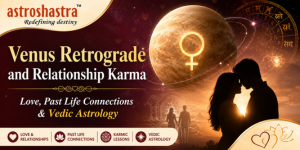
Discover how Venus Retrograde influences relationship karma, love, marriage, past-life connections, emotional healing, a...
Read More.png)
Discover how astrology shapes your destiny through your birth chart, planets, and karma. Learn how to use astrology to m...
Read More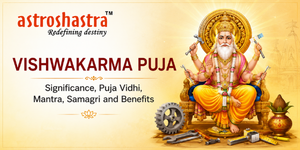
Vishwakarma Puja is dedicated to Lord Vishwakarma, regarded in Hindu tradition as the divine architect and craftsman....
Read More
Discover the divine story of Shaligram and Tulsi Vivah. Learn how Goddess Tulsi (Vrinda) became the sacred Tulsi plant, ...
Read More.png)
Discover how Daan (charity) improves your horoscope in Vedic astrology. Learn which donations help reduce planetary dosh...
Read More
Learn about Raksha Bandhan, its history, spiritual significance, Rakhi traditions, Puja Vidhi, rituals, mythology, broth...
Read More