

In Indian Astrology, the Moon or Chandra holds a special place as the ruler of the mind, emotions and consciousness. It is considered a luminary along with the Sun and is one of the most important planets in determining mental stability, peace and happiness.
The Moon governs Monday, is associated with the water element and represents the mother, sensitivity, nurturing qualities, intuition, memory and emotional responses.
A strong and well-placed Moon can support emotional balance, creativity, compassion, adaptability and a sense of inner security. An afflicted Moon may be associated with emotional fluctuations, uncertainty, sensitivity or difficulty maintaining mental peace.
Planet Moon as per Astronomy
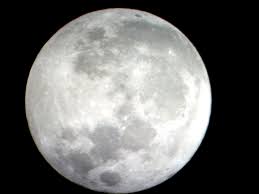
As per Astronomy, the Moon is the only natural satellite of the Earth. Though it is considered a luminary in astrology, it does not emit its own light but shines due to the reflection of the Sun's radiation.
At the perigee the Moon is approximately 356,404 kilometres away from the Earth, while at the apogee it is approximately 406,680 kilometres away. Like the paths of other celestial bodies, its path is elliptical.
The Moon is nearly one-fourth the size of the Earth. Only one half of the Moon is visible from Earth at a given time.
History of the Moon
The Moon has been known since prehistoric times and is one of the brightest objects visible in the night sky. It has been given many names in different cultures and mythologies, including Luna by the Romans and Selene and Artemis by the Greeks.
As the Moon orbits the Earth, the angle between the Earth, Moon and Sun changes. This produces the familiar cycle of lunar phases. The time between successive New Moons is approximately 29.5 days.
Due to its size and composition, the Moon has sometimes been compared with terrestrial planetary bodies such as Mercury, Venus and Mars.
Lord Chandra in Hindu Mythology
According to the Harivansha Purana, Chandra was the handsome son of Sage Atri and was nurtured by the ten Dishas or directions. He married the daughters of Daksha Prajapati, who were twenty-seven in number.
These twenty-seven wives are associated with the 27 Nakshatras of the Zodiac. The Moon is traditionally described as visiting each Nakshatra in rotation.

Traditional accounts further describe Chandra's relationship with the wife of Brihaspati, and the mythology surrounding Daksha's curse and the gradual decay associated with the Moon. Mercury is traditionally described in this mythology as being connected with Chandra.
Chandra is described in traditional astrological literature as having auspicious looks and sweet speech. He represents one Muhurta, a period of approximately 48 minutes, and the taste represented by the Moon is saline.
Planetary Relationships of Moon
According to the source material, Chandrama is friendly to Surya and Budha and neutral toward Mangal, Brihaspati, Shukra and Shani. Chandra does not consider any planet as its enemy, while certain planets are described as considering Moon unfriendly.
The Moon is traditionally associated with the northern direction.
Planet Moon in Astrology
In Vedic Astrology, the Moon or Chandra represents the mind, emotions, consciousness, intuition and inner peace. It is one of the most important indicators of mental and emotional patterns in a horoscope.
The Moon rules Cancer and is traditionally considered exalted at 3 degrees of Taurus and debilitated at 3 degrees of Scorpio. It is associated with the mind and enjoys a royal status among the planets in traditional astrological descriptions.
The Moon is associated with the mother and feminine energy. It represents responsiveness, receptivity, reflection and spontaneous emotional reactions.
It is also associated with the functionality of the mind, concentration, meditation, versatility and intuitive responses.
Traditional descriptions associate Moon with youth, love of poetry, fine arts, music, jewellery, attractive appearance, wealth and good fortune. It can also make an individual emotional, sensitive and changeable.
What Does the Moon Signify?
The Moon signifies Mother, mind, emotions, family life, home, personal affairs, intuition, imagination, beauty, creativity, music, art, water, fertility, nurturing and emotional security.
The Moon is connected with conception, birth of children, infants, passion, love, fertile imagination, deep feelings, thinking, amusements, music, painting, journeys, family life, home and personal affairs.
It is also traditionally associated with watery places such as oceans, rivers and lakes, as well as navigation and drinks.
Afflicted Moon in Horoscope
An afflicted Moon is traditionally associated with changeability, instability, lack of mental balance, excessive sensitivity, confusion, fear, inconsistency, impulsiveness and difficulty maintaining emotional peace.
Traditional interpretations may also associate an afflicted Moon with extravagance, pessimism, incoherence in thought and speech, excessive pleasure-seeking and undue expenditure.
When Moon is afflicted by Saturn, traditional astrology describes possible difficulties involving judgment, emotional heaviness and restraint. Such interpretations should always be assessed from the complete birth chart.
Moon in the 12 Zodiac Signs
The zodiac sign occupied by the Moon describes an important part of emotional temperament and mental expression. The original Astroshastra page provides clickable sign-specific Moon articles through the following zodiac map.

Waxing and Waning Moon
The source material notes a distinction between the ascending or waxing Moon cycle and the descending or waning Moon cycle. A waxing Moon is traditionally considered stronger than a waning Moon in many Vedic Astrology interpretations.
The Moon's rapidly changing position makes it particularly important for understanding short-term emotional tendencies, daily moods and mental responses.
Moon Beej Mantra
FAQs on the Planet Moon in Astrology
Rohini – Beauty, creativity and sensuality.
Hasta – Skill, service and craftsmanship.
Shravana – Listening, learning and wisdom.
Moon + Venus: Romantic, artistic and affectionate tendencies.
Moon + Mars: Passionate but potentially emotionally impulsive.
Moon + Saturn: Emotional restraint or heaviness.
Moon + Jupiter: Optimistic and spiritual tendencies.
Moon + Rahu/Ketu: Emotional confusion or heightened sensitivity.
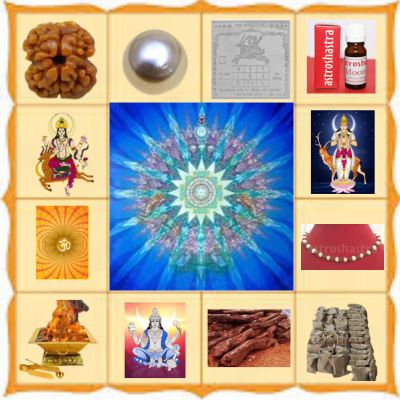
Moon Remedies in Vedic Astrology
Understand the Moon in Your Birth Chart
Discover how Chandra's sign, house, strength, aspects and planetary periods may influence your mind, emotions, relationships, family life and overall sense of happiness.
Consult Astroshastra


