


Things You Should Avoid During Shravan Maas | Important Dos and Don'ts in Sawan
Discover the important things to avoid during Shravan Maas according to Hindu traditions. Learn the spiritual significan...
Read More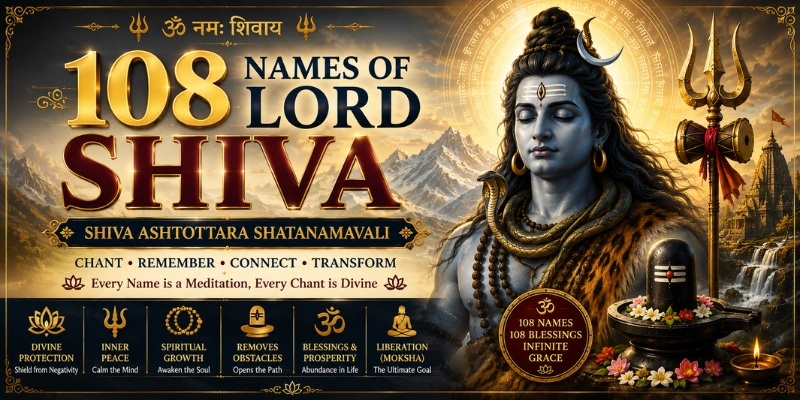
Lord Shiva is worshipped by millions of devotees through different names, forms, mantras and devotional traditions. The 108 Names of Lord Shiva, traditionally known as Shiva Ashtottara Shatanamavali, describe different attributes, qualities and manifestations associated with Mahadev.
Each name provides an opportunity for devotees to contemplate a particular aspect of Lord Shiva. Names such as Mahadeva, Mahakala, Mahayogi, Pashupati, Nataraja, Nilakantha, Rudra, Shambhu and Shankara reflect the many dimensions of Shiva in Hindu devotional tradition.
This Astroshastra guide brings all 108 names of Lord Shiva with their meanings together in one place, making it easy to read, understand and explore the traditional significance of each name.
The number 108 holds an important place in several Hindu spiritual and devotional traditions. It is commonly associated with completeness and is frequently used in mantra chanting and devotional recitation.
Shiva Ashtottara Shatanamavali gives devotees a structured way to remember and contemplate different qualities of Lord Shiva. Each name becomes a focus for prayer, remembrance and meditation.
The 108 names are traditionally recited during Shiva worship, including devotional observances associated with Maha Shivaratri, Shravan Maas, Mondays and Shiva Puja.
A revered Shiva mantra expressing devotion, remembrance and surrender to Lord Shiva.
Explore all 108 names of Mahadev with their traditional meanings and spiritual significance.
Lord Shiva, one of the principal deities of Hinduism, is worshipped in countless forms and manifestations. His 108 sacred names reveal different aspects of his divine personality, from the compassionate protector of devotees to the fierce destroyer of negativity and ignorance.
Chanting these names with devotion is believed to bring inner peace, spiritual growth, courage, protection from obstacles, and divine blessings. Each name reflects a unique attribute, power, or cosmic function of Mahadev and serves as a powerful meditation upon his infinite nature.
The Lord who fulfills wishes instantly and is easily pleased by devotion.
The Unborn One, eternal and beyond the cycle of creation and destruction.
The Lord possessing infinite and imperishable divine qualities.
The flawless and sinless Lord, free from all imperfections.
The One with infinite vision who sees past, present, and future.
The ever-blissful Lord who remains absorbed in divine ecstasy.
The imperishable and eternal Supreme Lord.
The fierce protector who destroys fear, evil, and ignorance.
The Lord with the divine third eye upon his forehead.
The innocent, compassionate, and kind-hearted Lord.
The Lord of spirits, beings, and all supernatural forces.
The Divine Lord who protects and sustains the Earth.
Protector of ghosts, spirits, and all subtle beings.
The Lord who governs and protects the Moon.
The One who bears the crescent moon and radiates divine brilliance.
The compassionate Lord who showers mercy on all devotees.
The God of gods and supreme among all celestial beings.
The divine source of wealth, prosperity, and abundance.
The embodiment of meditation, concentration, and wisdom.
The Lord who shines with infinite brilliance and radiance.
The ascetic Lord who wears the sky itself as His garment.
The One whose true nature is difficult to comprehend.
The unconquerable and invincible Lord.
The bearer of the sacred River Ganga upon His matted locks.
The beloved consort of Goddess Parvati (Girija).
The Lord who accepts and appreciates all virtues.
The supreme teacher and spiritual guide of the universe.
The remover of sins, suffering, and ignorance.
The Lord and ruler of the entire universe.
The redeemer who frees devotees from afflictions and suffering.
The Lord adorned with sacred matted locks.
The One who bestows peace, serenity, and spiritual bliss.
The Supreme Lord of the sacred Mount Kailash.
The Master and ruler of Mount Kailash.
The lotus-eyed Lord radiating divine beauty.
The ever-radiant Lord shining with divine splendor.
The One who wears a garland of skulls as a symbol of transcendence.
The Lord who carries the divine Khatvanga weapon.
The Lord adorned with sacred earrings and divine ornaments.
The Lord with the divine third eye upon His forehead.
The supreme Lord of all Shiva Lingas.
The king and ruler of all sacred Lingas.
The creator and sustainer of the three worlds.
The divine guardian and protector of the universe.
The infinitely wise and supremely intelligent Lord.
The Great God worshipped by gods and sages alike.
The Lord beyond time and the destroyer of death.
The master of divine illusion and cosmic mystery.
The great conqueror of death and giver of immortality.
The infinite treasure house of spiritual wealth and wisdom.
The Lord who possesses boundless divine energy and power.
The supreme yogi immersed in eternal meditation.
The Supreme Lord and ruler of all creation.
The Lord of all gods and cosmic forces.
The Lord adorned with serpents as divine ornaments.
The cosmic dancer who performs the dance of creation and destruction.
The blue-throated Lord who consumed the deadly poison.
The eternally beautiful and auspicious Lord.
The Lord who delights in divine dance.
The embodiment and origin of the sacred syllable Om.
The protector and sustainer of all beings.
The Supreme Lord above all gods and celestial beings.
The highest divine light illuminating the universe.
The Lord and protector of all living beings.
The wielder of the divine bow Pinaka.
The source and essence of the sacred syllable Om.
The Lord who dearly loves and protects His devotees.
The Lord whose vision is filled with love and grace.
The nourisher who sustains all creation.
The Lord whose eyes are as beautiful as blooming flowers.
The Lord who has the Sun as one of His divine eyes.
The fierce and powerful destroyer of ignorance and evil.
The Lord associated with the sacred Rudraksha beads.
The eternal and ever-auspicious form of Lord Shiva.
The eternal Lord who exists beyond time and space.
The supreme teacher and preceptor of all beings.
The all-auspicious One who embodies purity and goodness.
The One who burns away negativity and ignorance.
The source and origin of all creation.
The Lord and ruler of all gods and worlds.
The source of happiness, peace, and divine bliss.
The beneficent Lord who grants happiness and prosperity.
The auspicious One who removes darkness and suffering.
The Lord who wields the divine trident (Trishul).
The glorious Lord with the radiant and sacred neck.
The illuminator and revealer of the sacred Vedas.
The Lord whose form is eternally pure and divine.
The revered teacher and guide of Lord Skanda.
The Lord who is adorned with the sacred moon.
The divine bestower of happiness, peace, and fulfillment.
The Lord who is easily pleased by sincere devotion.
The Lord attended and worshipped by celestial beings.
The supreme ruler and Lord of all Devas.
The self-manifested Lord without beginning or end.
The Lord who radiates divine light and spiritual brilliance.
The three-eyed Lord who sees past, present, and future.
The master and protector of the three worlds.
The destroyer of the demon Tripura and conqueror of evil.
The Lord who wields the sacred Trishul (trident).
The beloved consort and eternal companion of Goddess Uma.
The Lord of wisdom, speech, and sacred knowledge.
The mighty Lord whose strength is as powerful as a thunderbolt.
The compassionate granter of boons and blessings.
The originator and source of the sacred Vedas.
The fierce warrior manifestation of Lord Shiva.
The wide-eyed Lord whose vision encompasses the universe.
The Lord and ruler of the entire universe.
The Lord whose divine vehicle is Nandi, the sacred bull.
Traditionally associated with Lord Shiva and spiritual consciousness.
A sacred geometric symbol traditionally associated with Lord Shiva worship.
Traditionally associated with the Mahamrityunjaya form of Lord Shiva.
A traditional Shiva worship practice associated with the Mahamrityunjaya Mantra.
Explore the divine energies of Hindu deities and discover their spiritual significance, blessings, mantras, and worship traditions.

Discover the important things to avoid during Shravan Maas according to Hindu traditions. Learn the spiritual significan...
Read More
Discover the most powerful Shiva mantras to chant during Shravan Maas. Learn their meanings, benefits, correct chanting ...
Read More
Prepare for Diwali 2026 with this 17-day guide to home cleaning, Vastu-inspired practices, spiritual reflection, Lakshmi...
Read More
Explore 9 traditional Vastu tips after Dussehra to refresh your home through decluttering, natural light, entrance care,...
Read More
Discover the significance of Dussehra and learn how Ravan Dahan teaches us to overcome ego, anger and greed for a more e...
Read More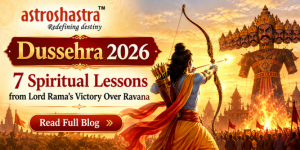
Discover 7 spiritual lessons from Lord Rama’s victory over Ravana and learn the deeper meaning of Dussehra 2026, Dharm...
Read More