








Navratri Vastu Tips for Home – Bring Positive Energy
Discover Navratri Vastu tips for home to create a clean, peaceful and spiritually uplifting environment during the nine ...
Read More
The Siddh Durga Rudraksha Mala is a sacred spiritual Mala traditionally associated with Goddess Durga, the embodiment of divine strength, courage and protection. It is designed for devotees who seek to incorporate the symbolism of Durga Shakti and Rudraksha into their spiritual and devotional practice.
The traditional significance of this Mala centres around protection, courage, determination and the ability to face difficulties with inner strength. It combines several varieties of Rudraksha, including Gauri Shanker, 9 Mukhi, 11 Mukhi, 10 Mukhi, 8 Mukhi and 5 Mukhi Rudraksha.
Goddess Durga is traditionally revered as the Divine Mother and as the embodiment of Shakti, the divine power that protects righteousness and destroys negative forces. The Siddh Durga Rudraksha Mala brings this traditional symbolism together with the spiritual significance of Rudraksha.
Rudraksha beads have traditionally been used for meditation, prayer, Japa and spiritual practices. A Mala prepared with the traditional association of Durga Shakti is therefore regarded as a meaningful spiritual accessory for devotees seeking courage, protection and inner strength.
The Siddh Durga Mala described on this page follows a distinctive traditional arrangement of Rudraksha beads. The central bead is a Gauri Shanker Rudraksha, accompanied by multiple Mukhi Rudraksha beads and completed as a 108+1 bead rosary.
The Gauri Shanker Rudraksha occupies the central position in the traditional Durga Mala arrangement. Gauri Shanker is recognised by its naturally joined Rudraksha structure and is traditionally associated with harmony, balance and the divine union represented by Shiva and Parvati.
Its central placement gives the Mala a distinctive spiritual character and represents the foundation around which the other Rudraksha beads are arranged.
9 Mukhi Rudraksha is traditionally associated with Goddess Durga and her powerful Shakti. It represents courage, determination and the ability to overcome difficulties.
The traditional Durga Mala described here contains two 9 Mukhi Rudraksha beads on each side of the central Gauri Shanker, making 9 Mukhi an important component of the combination.
11 Mukhi Rudraksha is traditionally associated with courage, strength and spiritual discipline. It forms part of the protective and empowering symbolism of this Siddh Mala.
10 Mukhi Rudraksha is traditionally regarded as a protective Rudraksha. Its inclusion in this Mala adds the traditional symbolism of protection, confidence and security.
8 Mukhi Rudraksha is traditionally associated with Lord Ganesha and the removal of obstacles. In the Durga Mala combination, it represents the traditional aspiration to overcome difficulties and move ahead with determination.
5 Mukhi Rudraksha is among the most commonly used Rudraksha varieties in traditional Mala and Japa practices. The described Durga Mala uses larger 5 Mukhi beads within the combination and smaller 5 Mukhi beads to complete the rosary.
Protection is one of the central traditional themes associated with this Mala. Goddess Durga is revered as the Divine Mother who protects against forces of adharma and restores balance.
Devotees may choose a Durga Rudraksha Mala as a spiritual reminder of courage, faith and the ability to face difficult circumstances with greater inner strength.
In traditional Indian spiritual practices, Goddess Durga is invoked for protection from negativity, fear and harmful influences. The Durga Rudraksha Mala is therefore often associated with spiritual protection and maintaining a positive state of mind.
Rather than treating these traditional beliefs as guaranteed protection from supernatural forces, the Mala can be understood as a devotional symbol that supports faith, prayer, meditation and inner resilience.
Durga represents Shakti, strength and fearlessness. The traditional symbolism of the Durga Mala is therefore particularly relevant to people going through challenging periods or situations requiring courage and determination.
Meditation and devotional practice with the Mala can provide a meaningful spiritual routine for cultivating confidence, discipline and emotional resilience.
The purpose of a Siddh Mala extends beyond material concerns. It can also become part of a regular spiritual discipline involving Japa, meditation, prayer and contemplation.
Devotees who worship Goddess Durga may use the Mala during their devotional practices as a representation of divine Shakti and protection.
The traditional Mala described on this page is completed as a 108+1 bead rosary. The central bead arrangement and supporting Rudraksha beads are followed by smaller 5 Mukhi beads on red thread to create the complete rosary.
The number 108 holds a special place in many Hindu spiritual traditions and is commonly used in mantra Japa and devotional practices.
The Mala may traditionally be worn around the neck or used during meditation, prayer and Japa. Devotees may follow their customary methods for purification, energisation and devotional preparation.
Those following a specific Durga Sadhana may also use the Mala according to the guidance of their Guru or spiritual teacher.
The Mala can be meaningful for devotees of Goddess Durga and for individuals who are naturally drawn to the traditional qualities of courage, protection, strength and spiritual discipline.
It may be particularly suitable for people who wish to maintain a regular devotional practice centred around Maa Durga.
Learn more about the individual Rudraksha varieties used in this traditional combination:
Gauri Shanker Rudraksha | 9 Mukhi Rudraksha | 11 Mukhi Rudraksha | 10 Mukhi Rudraksha | 8 Mukhi Rudraksha | 5 Mukhi Rudraksha
Discover sacred Rudraksha beads, Malas and divine spiritual products for your personal devotional practice.
Explore Rudraksha CollectionExplore hand-picked articles related to this topic to deepen your astrological knowledge.
Discover Navratri Vastu tips for home to create a clean, peaceful and spiritually uplifting environment during the nine ...
Read More
Discover the spiritual significance of Navratri in Hinduism, the nine forms of Maa Durga, Navadurga worship, fasting, Ka...
Read More
Discover why Goddess Lakshmi loves cleanliness according to Hindu traditions. Learn the spiritual significance of a clea...
Read More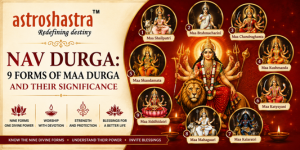
Discover the 9 forms of Maa Durga, known as Nav Durga or Navadurga, and learn their names, symbolism, spiritual signific...
Read More
Discover the best Vastu tips for offices to attract success, productivity, financial growth, and positive energy. Learn ...
Read More
Discover effective Vastu tips for home to attract positivity, peace, wealth, and harmony. Learn simple Vastu remedies fo...
Read More