











Thursday Astrological Remedies – Guru, Jupiter & Powerful Thursday Remedies
Discover powerful Thursday remedies for Planet Jupiter including Guru Mantra, Yellow Sapphire, Five Mukhi Rudraksha, Bri...
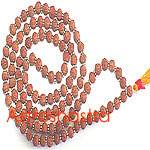
Read MoreThe Five Mukhi Rudraksha Japa Mala is one of the most widely used traditional Malas for mantra chanting, meditation, prayer and spiritual practice. Made with Five Mukhi Rudraksha beads and a Sumeru bead, it is designed to support a disciplined and focused approach to Japa.
Five Mukhi Rudraksha is traditionally associated with Lord Shiva in the form of Kalagni Rudra. It is also traditionally connected with the five elements of nature — Earth, Water, Fire, Air and Space — making it a popular choice for those seeking balance between body, mind and spiritual awareness.
A Japa Mala is more than a spiritual accessory. It serves as a practical aid for counting mantra repetitions while helping the practitioner maintain concentration during meditation and prayer.
A Five Mukhi Rudraksha Japa Mala is traditionally made using 108 Five Mukhi Rudraksha beads along with one Sumeru bead. The existing page describes this traditional 108-bead plus Sumeru arrangement specifically for mantra chanting, meditation and spiritual practices.
The Mala can be used for counting repetitions of a chosen mantra. It is particularly popular among devotees, meditation practitioners, yoga practitioners and spiritual seekers.
Five Mukhi Rudraksha is traditionally regarded as a sacred bead associated with Lord Shiva in the form of Kalagni Rudra. The existing content also connects it symbolically with the five elements of nature — Earth, Water, Fire, Air and Space.
Because of its broad traditional acceptance, Five Mukhi Rudraksha is commonly used in Japa Malas and is considered suitable for people following different spiritual paths.
According to the traditional beliefs presented on the original page, Five Mukhi Rudraksha is associated with meditation, spiritual growth, wisdom, protection and inner balance.
Meditation becomes more structured when a Mala is used to count mantra repetitions. Each bead provides a physical point of focus, allowing the practitioner to maintain a steady rhythm while concentrating on the mantra.
The Five Mukhi Rudraksha Japa Mala is therefore traditionally used by devotees and meditation practitioners who want to combine mantra repetition with the spiritual symbolism of Rudraksha.
The traditional instructions on the existing page recommend the following method of using the Mala for Japa.
The number 108 holds a special place in Indian spiritual traditions and is widely used for mantra Japa and meditation. A Mala containing 108 beads allows the practitioner to complete one traditional cycle of mantra repetition.
The additional Sumeru or Guru bead traditionally marks the completion of the cycle. It is not normally counted as one of the 108 mantra repetitions.
The Sumeru bead, also known as the Guru bead or Meru bead, is the larger or distinctive bead traditionally placed at the end of the 108-bead Mala.
During Japa, the practitioner reaches the Sumeru after completing one cycle and traditionally reverses direction instead of crossing over it.
Five Mukhi Rudraksha Japa Malas can traditionally be used for different mantras according to the practitioner's spiritual path. The existing page specifically mentions Om Namah Shivaya and the Gayatri Mantra as examples.
Five Mukhi Rudraksha Japa Mala is traditionally considered a universal Mala. The original page states that it may be used by people regardless of age, gender or profession.
It can be meaningful for students, householders, meditation practitioners, devotees, yoga practitioners and spiritual seekers who wish to establish a regular mantra or meditation practice.
The traditional descriptions of Five Mukhi Rudraksha associate it with wisdom, knowledge, concentration and self-awareness. For this reason, a Five Mukhi Japa Mala is often chosen by students and learners who wish to include meditation or mantra practice in their daily routine.
A Japa Mala can become part of a simple daily spiritual routine. Regular mantra chanting can help create discipline and provide a dedicated period for prayer, meditation and reflection.
The Five Mukhi Rudraksha Mala combines this traditional Japa practice with the spiritual significance of Rudraksha.
If you want to learn more about the bead itself, visit our Five Mukhi Rudraksha page for detailed information about its traditional significance, forms and uses.
Astroshastra offers a wide collection of traditional Rudraksha Malas, Japa Malas, Siddh Malas and Rudraksha Pendants. You can explore different Mala combinations and spiritual pendants according to your devotional and spiritual requirements.
Discover Five Mukhi Japa Malas, traditional Rudraksha Malas, Siddh Malas and spiritual Rudraksha combinations.
Explore Rudraksha MalasExplore hand-picked articles related to this topic to deepen your astrological knowledge.

Discover powerful Thursday remedies for Planet Jupiter including Guru Mantra, Yellow Sapphire, Five Mukhi Rudraksha, Bri...
Read More
Discover the significance and benefits of Bagalamukhi Yantra for protection, overcoming obstacles, controlling negative ...
Read More
Discover powerful Wednesday remedies for Planet Mercury including Budh Mantra, Emerald, Four Mukhi Rudraksha, Budh Yantr...
Read More
Discover powerful mantras for planets in Vedic astrology. Learn Navgraha mantras for Sun, Moon, Mars, Mercury, Jupiter, ...
Read More
Discover powerful Monday remedies for Planet Moon including Chandra Mantra, Shiva Puja, Pearl, Two Mukhi Rudraksha, Chan...
Read More
Discover the most powerful Shiva mantras to chant during Shravan Maas. Learn their meanings, benefits, correct chanting ...
Read More