











Planetary Changes in October 2026: Dates & Effects
Explore planetary changes in October 2026, including Venus retrograde, Sun and Mercury transits, Jupiter's entry into Le...
Read More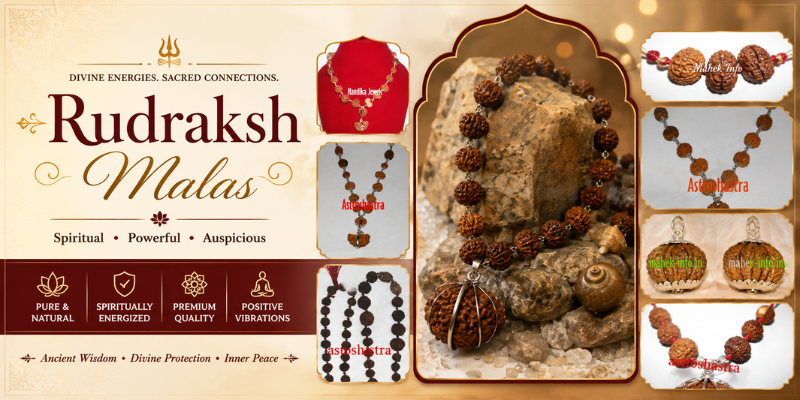
Rudraksha Mala is traditionally used for Japa, meditation, prayer and devotional practice. Made from sacred Rudraksha beads, a Mala can serve both as a spiritual tool for counting mantras and as a traditional form of devotional wearing.
Rudraksha Malas are available in different bead counts, Mukhi combinations and designs. Some are created primarily for Japa, while others are worn as neck Malas or prepared with combinations of Rudraksha, gemstones and other sacred materials.
This guide explains the different types of Rudraksha Malas, the significance of 108+1 beads, Japa Mala usage, how to choose a Mala, traditional wearing practices, care and authenticity.
A Rudraksha Mala is a string of Rudraksha beads traditionally used for prayer, meditation and mantra repetition. The individual beads are threaded together to create a rosary or Mala that can be used for counting repetitions of a mantra.
Rudraksha Malas can be made with beads of the same Mukhi or with selected combinations according to the intended spiritual or traditional purpose.
The Mala may be used during Japa, kept in a prayer space or worn around the neck according to the tradition followed by the practitioner.
One of the most traditional uses of a Rudraksha Mala is Japa, the repeated recitation of a mantra. Moving through the beads one by one provides a physical method of keeping count while maintaining concentration on the mantra.
For many practitioners, the Mala also becomes a reminder to maintain a regular meditation and prayer routine.
Rudraksha is traditionally associated with Lord Shiva, making Rudraksha Mala particularly popular among devotees who practise Shiva mantra Japa.
The number 108 has special significance in several Indian spiritual traditions. A traditional Japa Mala commonly contains 108 beads, along with an additional bead known as the Guru Bead, Meru or Sumeru.
The additional bead provides a point at which the practitioner traditionally turns the Mala around instead of crossing over the Guru bead.
The detailed significance of 108 beads is explained in our dedicated guide: Why Rudraksha Malas Have 108+1 Beads .
The number of beads can vary according to the type and purpose of the Mala. Traditional Japa Malas commonly use 108 beads with a Guru bead, while shorter Malas may contain 27 or 54 beads.
| Mala Type | Traditional Use |
|---|---|
| 108+1 Beads | Traditional Japa and mantra practice |
| 54 Beads | Shorter Japa practice |
| 27 Beads | Compact Mala for mantra repetition |
| Neck Mala | Traditional devotional wearing |
Different types of Rudraksha Malas are available according to the Mukhi of the beads, spiritual purpose, bead combination and design.
A traditional Mala may contain Rudraksha beads of the same Mukhi and is commonly used for prayer, meditation and devotional practice.
A Japa Mala is designed primarily for counting mantra repetitions. A traditional 108+1 Rudraksha Mala is commonly used for this purpose.
A Mala may be prepared from a particular Mukhi Rudraksha according to its traditional association. To understand the different Mukhi beads, visit our main Rudraksha Beads Guide .
Some Malas combine Rudraksha beads with gemstones or other traditional materials. These combinations are often selected for their spiritual, decorative or astrological symbolism.
Astroshastra also offers Malas created around particular traditional combinations and spiritual intentions, including deity-based, planetary and special Rudraksha combinations.
The number of natural faces or Mukhi is one of the most important ways of classifying Rudraksha. Different Mukhi beads have different traditional associations with deities and planets.
Before selecting a Mala based on a particular Mukhi, it is useful to understand the individual Rudraksha types.
Explore the complete: Rudraksha Beads Guide – 1 to 21 Mukhi .
Rudraksha is also associated with traditional Indian astrology. Different Mukhi beads are traditionally connected with particular planetary influences, Nakshatras and zodiac signs.
| Astrological Topic | Explore |
|---|---|
| Planets and Rudraksha | Rudraksha According to Planets |
| Nakshatras and Rudraksha | Rudraksha According to Nakshatra |
| Zodiac Signs and Rudraksha | Rudraksha According to Zodiac |
| Planets in Astrology | Planets in Astrology |
| 27 Nakshatras | Nakshatras in Astrology |
| 12 Zodiac Signs | Sunsigns in Astrology |
| Horoscope Houses | Houses in Horoscope |
The right Mala depends upon how you intend to use it. A Mala selected primarily for mantra Japa may be different from one selected for devotional wearing or according to traditional astrological considerations.
Before purchasing a Mala, consider:
A traditional Japa practice involves holding the Mala comfortably and repeating the chosen mantra while moving from one bead to the next.
The Guru bead or Meru is traditionally treated as the starting and turning point. After completing a round, many practitioners turn the Mala around rather than crossing over the Guru bead.
The exact Japa method can vary according to the mantra, spiritual tradition and personal practice.
Rudraksha Malas may be worn around the neck as a traditional sacred adornment. Some practitioners prefer to use their Mala exclusively for prayer and Japa.
If you intend to wear a Mala, it is advisable to follow the practices of the tradition in which you have been initiated or instructed.
For traditional guidance on wearing Rudraksha, see: Rules for Wearing Rudraksha Beads .
Many devotees traditionally cleanse and prepare a Rudraksha Mala before using it for the first time. Prayer and mantra recitation may be performed according to the practitioner's tradition.
For a detailed traditional procedure, visit: How Rudraksha Puja is Performed .
Rudraksha beads should be handled carefully and protected from unnecessary exposure to harsh chemicals, perfumes and prolonged moisture.
Authenticity is particularly important when purchasing rare or expensive Rudraksha Malas. Natural Rudraksha beads have naturally formed Mukhi lines and characteristic surface features.
A simple home test should not be considered absolute proof of authenticity. For valuable Rudraksha, appropriate laboratory testing and reliable documentation can provide greater confidence.
Read our detailed guide: Rudraksha Purity and Authenticity .
Different sacred materials are traditionally used to make Malas, including Rudraksha, Tulsi, crystal and other materials. The choice depends upon the spiritual tradition, mantra and purpose of practice.
Rudraksha Mala is particularly associated with Shiva-oriented spiritual practice and is widely used for meditation and Japa.
A Rudraksha Mala can become a meaningful part of a regular spiritual routine. Using the same Mala for daily Japa can provide continuity and help establish a dedicated space for prayer and meditation.
The spiritual value of the Mala lies not only in the physical beads but also in the discipline, intention and devotional practice of the person using it.
Explore our collection of traditional Rudraksha Malas, Japa Malas and special Rudraksha combinations.
Explore Rudraksha MalasA Rudraksha Mala is a string of Rudraksha beads traditionally used for prayer, meditation, mantra Japa and devotional practice.
A traditional Japa Mala commonly contains 108 beads along with a Guru bead, also called Meru or Sumeru. Shorter Malas may contain 27 or 54 beads.
The number 108 has special significance in several Indian spiritual traditions. A 108-bead Mala is traditionally used for counting mantra repetitions.
Yes. Rudraksha Mala is traditionally used for Japa and meditation, especially for devotees following Shiva-oriented spiritual practices.
Yes. Rudraksha Mala is traditionally worn around the neck as a sacred adornment. Some people instead reserve their Mala exclusively for Japa and prayer.
It should be handled gently and protected from harsh chemicals, perfumes and prolonged moisture. A clean, dry storage place is recommended.
Natural Mukhi lines and the overall structure of the beads should be examined. For rare or expensive Rudraksha, appropriate laboratory authentication is preferable to relying on a single home test.
The choice depends upon whether the Mala is intended for Japa, meditation, devotional wearing or traditional astrological purposes. The Mukhi, bead quality, number of beads and authenticity should all be considered.
Traditional astrological recommendations may consider planets, Nakshatra, zodiac sign and the complete horoscope. For personalised guidance, a complete birth chart is more useful than a general zodiac recommendation.

Explore planetary changes in October 2026, including Venus retrograde, Sun and Mercury transits, Jupiter's entry into Le...
Read More.png)
Discover the benefits of Lakshmi Ganesh Yantra, its spiritual significance, puja vidhi, placement rules, and how to wors...
Read More
Discover how numerology consultation can help you understand your personality, career, relationships, business prospects...
Read More
Discover how your birth Nakshatra influences luck, fortune, career, wealth, relationships and opportunities. Learn the r...
Read More
Discover the significance of Anant Chaturdashi, its Vrat and Puja Vidhi, Anant Sutra tradition, Lord Vishnu Mantra, ritu...
Read More
Discover the connection between your Nakshatra and lucky numbers in Vedic Astrology. Learn how Nakshatra lords, planetar...
Read More