










Navratri in Hinduism – Why Nine Nights Are Spiritually Important
Discover the spiritual significance of Navratri in Hinduism, the nine forms of Maa Durga, Navadurga worship, fasting, Ka...
Read More


A typical rural festival of north India, it is a very
prominent one for Punjab. This agriculture-based festival, signifying the rejoice of the farmers who have had reaped a good crop and are hoping
for even better next crop. It is celebrated with gusto and fervour by the sturdy people of Punjab known to be a great connoisseur of all good
things of life. It they know how to work hard they also know how to relax.
Falling invariably on April 14 and marking the beginning of the solar year for most of the north Indian people, Baisakhi is called so because immediately after it, starts the lunar
month of Baisakh. However, once in four years when the extra month (Purushottam or Londh Mass) is added (in the middle of the year making it 13 month long) Baisakhi falls in Baisakh.
Just before Baisakhi, the first and main crop of the year, the Rabi crop, has been harvested and sold.
So the farmer has ample time and money to celebrate the occasion. Also by this
time the weather also becomes enjoyable; neither it is very hot nor cold - so he is delighted to enjoy life with his friends and relations and also thank Lord Almighty for allowing
him such a peace and plenty of everything.
In the morning of Baisakhi, people take part in a nahan (bath) at all the rivers and tanks. From early morning there is a great rush of people. Dressed in festive attire, people go
to temples and gurdwaras with mithai and money (which is supposed to be one-tenth of the total produce or whatever they are capable of donating). They give 'thanks' for their fortune
and pray for a better crop the next year. The day is considered very auspicious and big melas (fairs) of cows and buffaloes are organised in the village grounds, where many financial
transactions take place. Also, fun melas enliven the landscape in every town and village.
Here the old and the young in colourful clothes and turbans come to enjoy the mela. The
giant wheels and the merry-go-rounds (set up in virually no time since they are portable and every village has hand-maneuvered contraptions) provide great entertainment and joy.
Eating is the order of the day, and chaat, ice¬cream, flossy sugar lollipops and other delicacies are in great demand. Balloons and all varieties of wooden and clay toys are
displayed for sale.
People take other household or daily requirement articles like pots and pans to sell and buy arid the hustle and bustle attracts almost everyone to the fair.
Sometimes, a new-born baby is taken to the temple or gurdwara and the first drink of water is given to it with a rose petal (Of course, if the baby is a few days old, one is not
supposed to deny water to a baby for long).
For the Sikhs, Baisakhi represents a very sanctified day. It is on this day that Guru Gobind Singh initiated the 'Panch Piyara' (the five loved ones). He decorated the Khalsa
(Khalsa-Sajaya) at Anandpur Sahib near Chandigarh and gave these five people (all from the scheduled castes, and from different provinces of India, e.g., from Punjab, from Uttar
Pradesh, from Andhra Pradesh and from Bihar) the first sermon on being a true Sikh. He made them promise not to cut their hair or beard; to always keep a comb; always wear an
iron bangle on one arm; always wear an underwear; and always carry a kirpan (a small sword so as to be ever-ready for battle).
(Guru Gobind Singh was then fighting the invading
Muslims) Baisakhi becomes a really sacred and pious day for the Sikh community and a true 'Khalsa' rejoices in it.
One of the most sacred pilgrimage centres for the Punjabis, especially for the Sikhs, is Amritsar, where the Golden Temple is situated. This temple is known as 'Hari Mandir'.
It has a huge tank all round the temple and anyone bathing in it is purified, and his or her sins are washed away.
On Baisakhi day, water is brought from all the sacred rivers of
India and poured into this sarovar (mini- ocean).
Every household teaches its children to give thaan on Baisakhi day which is the first day of the solar calendar, so that throughout the year the feeling of charity remains in the
heart.
Baisakhi involves a lot of socialising. Friends and relatives are invited for dinner or lunch. Hard drinks and meat are allowed to be served and people really enjoy themselves at
home. There is no puja to be performed at home, except of course the necessary cleaning up that should be done during all festivals.
Lots of fruit like ber and lookat, and mithai
are sent to the houses of the daughters as gifts for the entire family, as the father and brothers would have earned a lot of money and must share it with their daughters and sisters.
The whole community celebrates Baisakhi together but, at home, Baisakhi must also become a festive occasion with everyone sharing in the giving and taking. Visitors are welcomed,
and offered lassi and mithai, and also other foodstuffs. On the whole, the festival leads to contentment and offers bright hopes for the future.
Personalized astrology consultations, predictions and remedies prepared by experienced Vedic astrologers.
Explore hand-picked articles related to this topic to deepen your astrological knowledge.
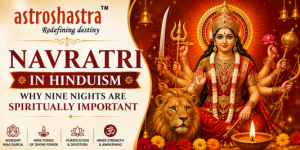
Discover the spiritual significance of Navratri in Hinduism, the nine forms of Maa Durga, Navadurga worship, fasting, Ka...
Read More
Discover how your birth Nakshatra influences luck, fortune, career, wealth, relationships and opportunities. Learn the r...
Read More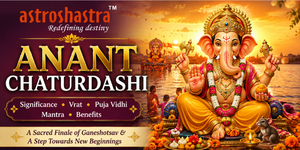
Discover the significance of Anant Chaturdashi, its Vrat and Puja Vidhi, Anant Sutra tradition, Lord Vishnu Mantra, ritu...
Read More
Discover the connection between your Nakshatra and lucky numbers in Vedic Astrology. Learn how Nakshatra lords, planetar...
Read More
Learn how to choose an auspicious Business Opening Muhurat using Tithi, Nakshatra, Lagna, Panchang, planetary positions,...
Read More
Discover which Nakshatra is considered the luckiest in Vedic Astrology. Learn why Pushya Nakshatra is highly auspicious,...
Read More